• About us
    • Who we are
    • Mission
  • Contacts
  • English
    • Português (Portuguese (Portugal))
    • Español (Spanish)
    • Français (French)
  • Login
Investorpolis
[xyz-ips snippet="Banners-Publicitarios"]
No Result
View All Result
No Result
View All Result
Investorpolis
No Result
View All Result
Home Wealth and Investing Investing

2Q26 Financial Markets Outlook: From the rotation of AI-related technologies to the correction of the war in Iran

8 de April, 2026
in Investing, Wealth and Investing
Reading Time: 9 mins read
0 0
0
2Q26 Financial Markets Outlook: From the rotation of AI-related technologies to the correction of the war in Iran
Share on FacebookShare on Twitter

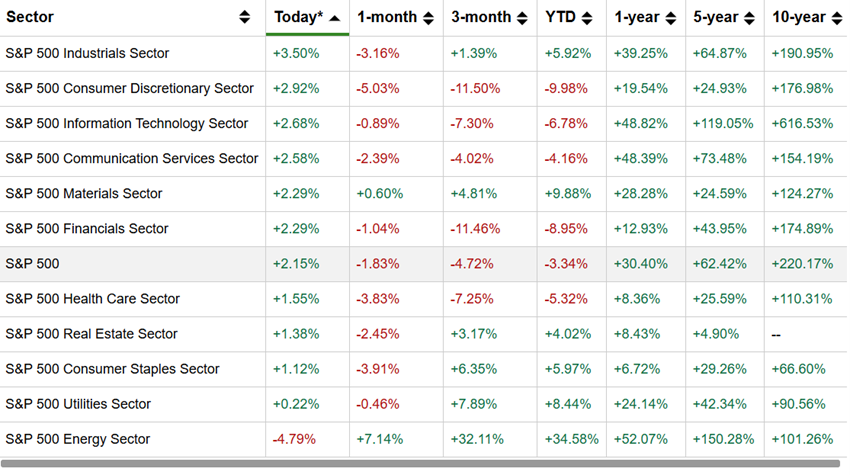
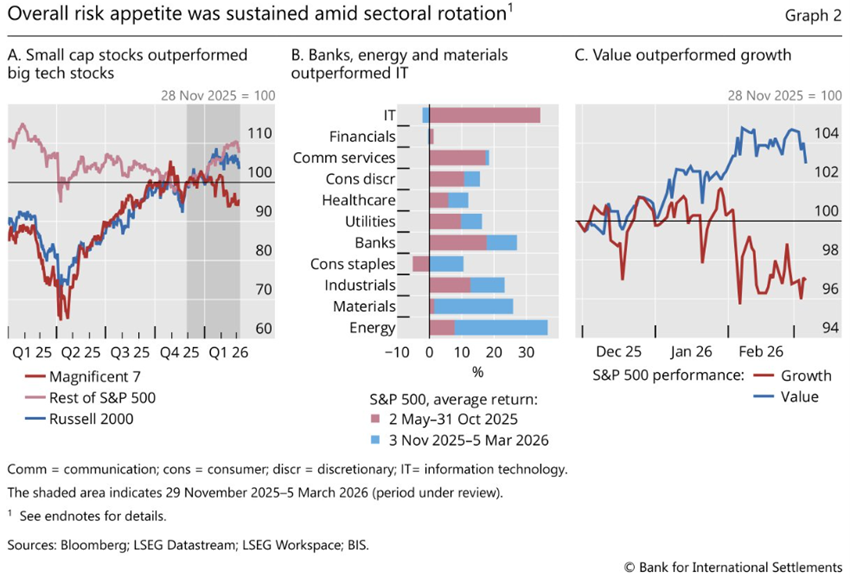
The first quarter began with a rotation of AI-related technologies to other sectors, followed by the war in Iran, which caused a huge increase in the price of oil and economic and financial destabilization around the world.

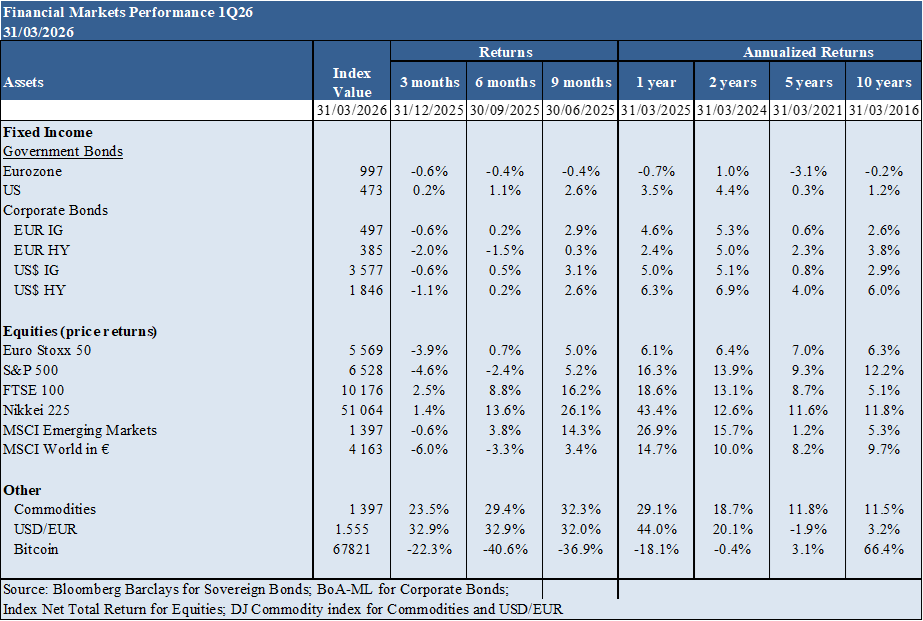
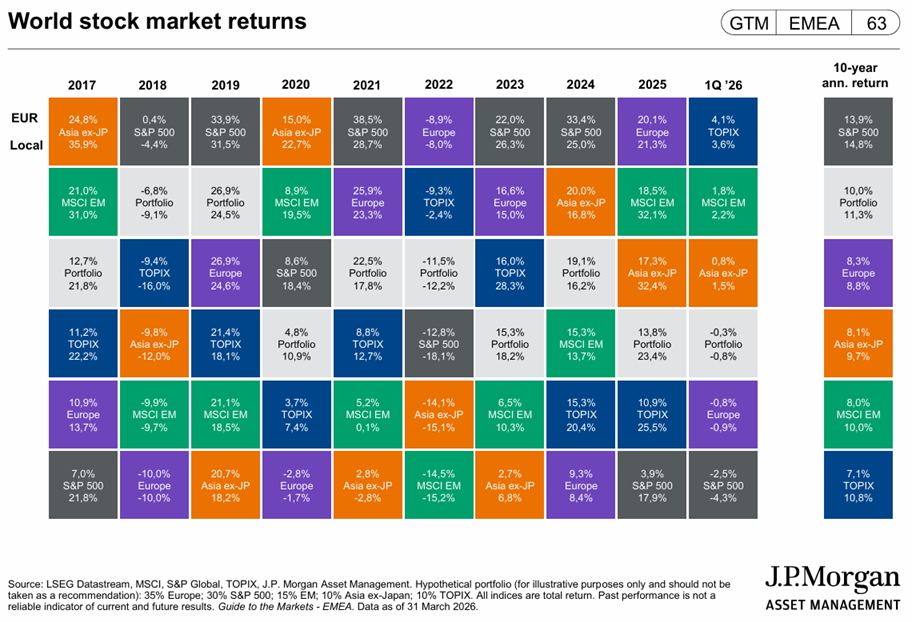
Financial markets performance 1Q26: Stocks in developed countries have fallen on the sharp rise in oil prices and the economic and geopolitical instability associated with the war in Iran.

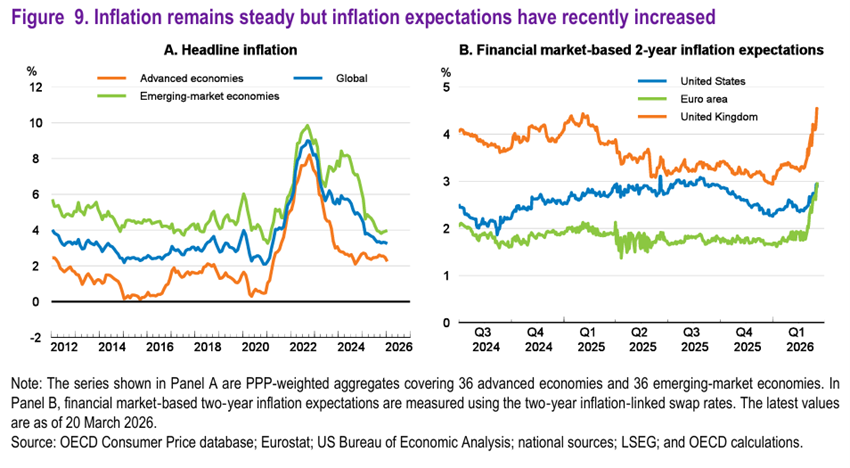
Macro Context: Macro forecasts are very dependent on the duration and outcome of the war in Iran, which has already caused a decline in economic growth and a rise in inflation expected in the main economies.

Micro Context: Leading instantaneous and advanced economic indicators show declines as a result of the war.

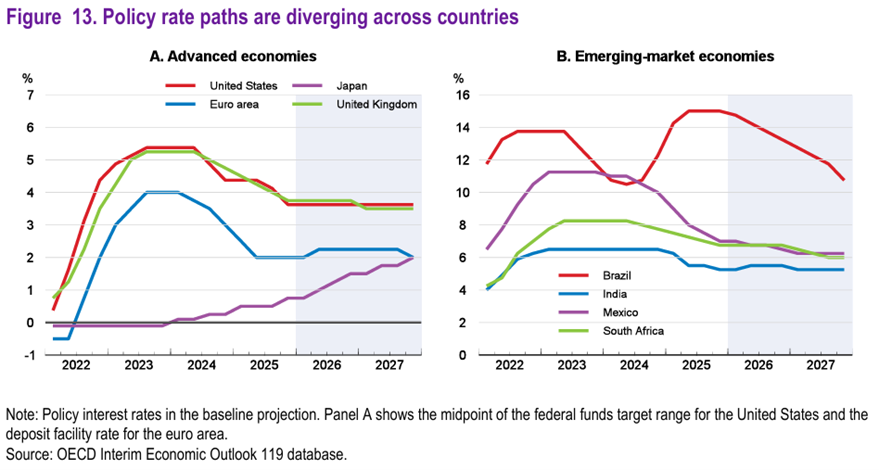
Economic policies: All central banks in major developed countries have maintained and are expected to keep official interest rate levels stable in 2026, but are mindful of any change in circumstances arising from the war in Iran.

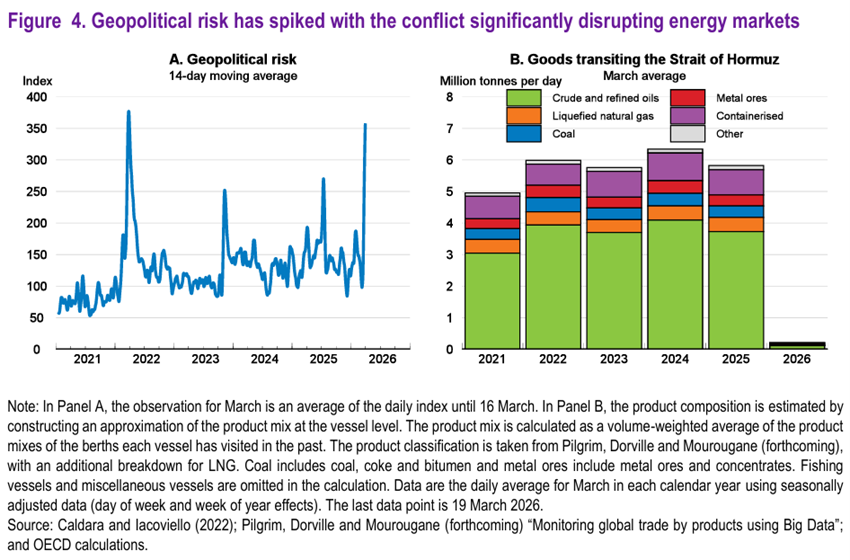
Equity markets: Equity markets enter a correction with the escalation of the war in Iran and the disruptions caused by the closure of the Strait of Hormuz.

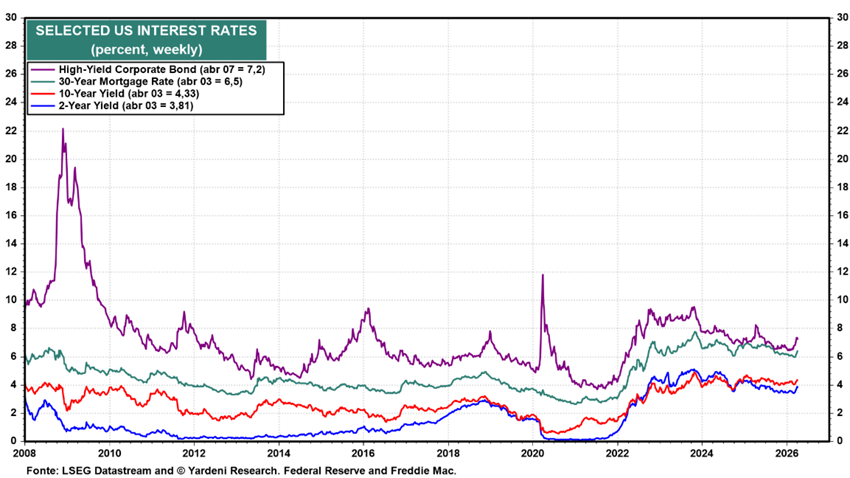
Bond markets: Long interest rates rose on the back of rising geopolitical risks and a possible rise in inflation.

Key opportunities: The swift outcome of the war in Iran.

Main risks: The prolongation of the war in Iran for several months.

Financial markets are very dependent on the evolution of the war in Iran, given the possible effects on economic growth and inflation.

Financial markets performance 1Q26: Developed country stocks fell on the sharp rise in oil prices and the economic and geopolitical instability associated with the war in Iran.

At the beginning of 2026, tech stocks experienced a volatile moment, characterized by a sharp rotation, moving away from large-cap software leaders to energy, materials, and small-cap stocks.

Investors reacted to “AI fatigue” and skepticism about the ROI of huge spending on artificial intelligence infrastructure.

The war in Iran has caused oil prices and geopolitical risk premia to rise to levels recorded during the First Gulf War in 1990 and the Russia-Ukraine conflict in 2022.

In March 2026, oil prices soared to almost $120/barrel (from $65/barrel) due to conflicts in the Middle East, causing major economic and financial instability.

This morning, Trump’s announcement of a two-week ceasefire resulted in a 15% drop in the price of oil.
.

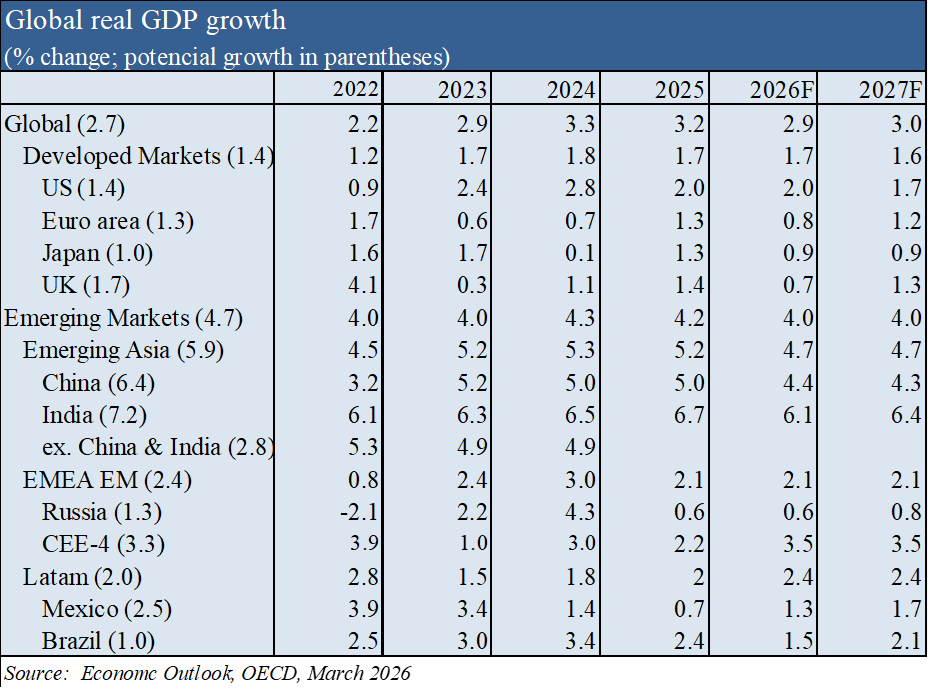
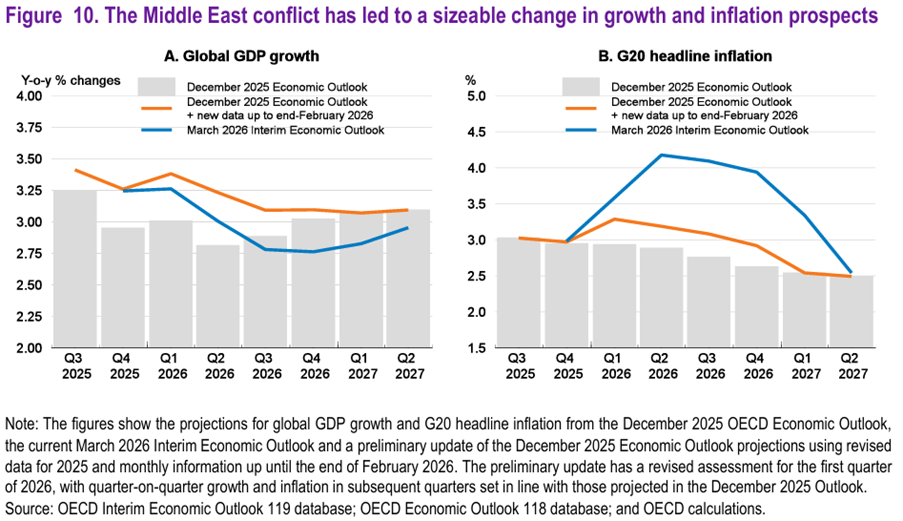
Macroeconomic context: Macroeconomic forecasts are very dependent on the duration and outcome of the war in Iran, which has already led to a decline in economic growth and a rise in inflation expected in the main economies.

Global GDP growth is projected to decline to 2.9% in 2026 before rising to 3.0% in 2027, assuming that the current extent of the energy market disruption moderates over time, with oil, gas and fertiliser prices gradually declining from mid-2026.

Annual GDP growth in the United States is projected to moderate from 2.0% in 2026 to 1.7% in 2027, as strong AI-related investment is gradually offset by a slowdown in real income growth and consumer consumption.

Eurozone GDP growth is forecast to slow to 0.8% in 2026 as higher energy prices weigh on activity, before rising to 1.2% in 2027, driven by an increase in defence spending.

In China, growth is forecast to slow to 4.4% in 2026 and 4.3% in 2027.

Core inflation in the G20 advanced economies is projected to decline from 2.6% in 2026 to 2.3% in 2027.

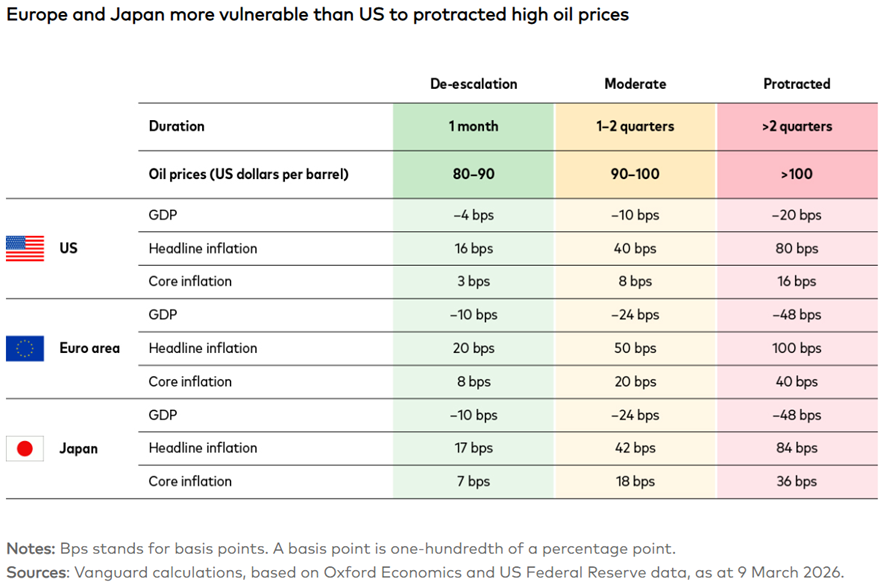
The war in Iran and the rising price of oil risks triggering global inflation, reducing GDP growth and potentially causing a recession if prices remain high, with Europe and Asia being the most vulnerable.
Microeconomic context: Key instant and forward economic indicators are expanding slightly around the world, with some cooling in recent months.

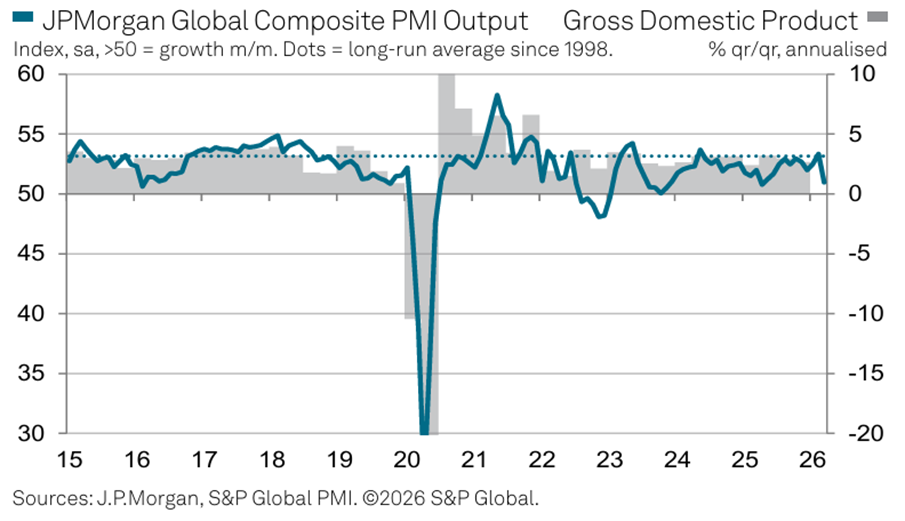
J.P. Morgan’s global composite PMI production index fell to an 11-month low of 51.0 in March, down from February’s 21-month high of 53.3, but held above the neutral mark of 50.0 for the thirty-eighth consecutive month.

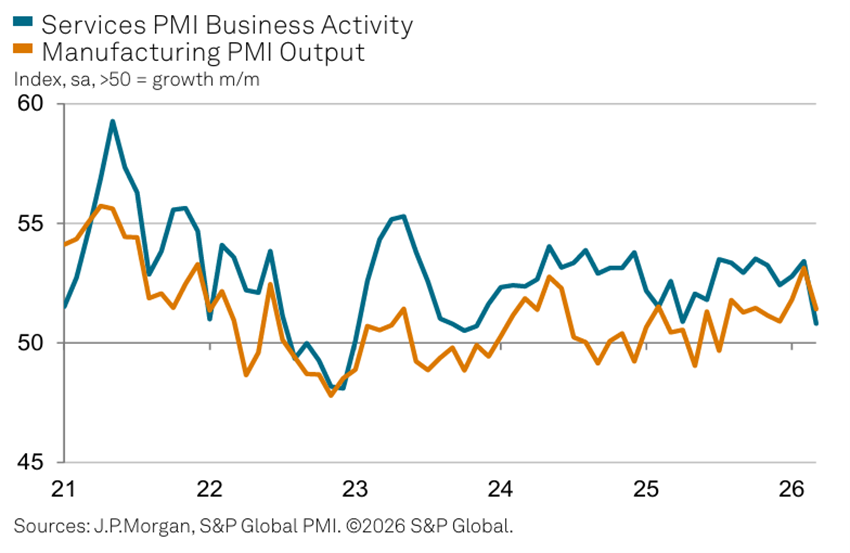
Output expansion rates slowed down in the manufacturing and services sectors, reaching 3-month and 28-month lows respectively.

The Global Manufacturing Index registered 51.4 and the Global Services Business Activity Index 50.8.

March was the first time since December 2022 that the reading of the manufacturing index was higher than the equivalent in services.
Economic policies: All central banks in major developed countries have maintained and are expected to keep official interest rate levels stable in 2026, but keeping an eye on any change in circumstances arising from the war in Iran.

Official interest rates in the US, Eurozone and UK are expected to remain at current levels in 2026.

In the face of the energy price shock, central banks will remain vigilant to ensure that inflation expectations remain well anchored.

Monetary policy adjustments may be necessary if price pressures broaden or if the growth outlook weakens substantially.
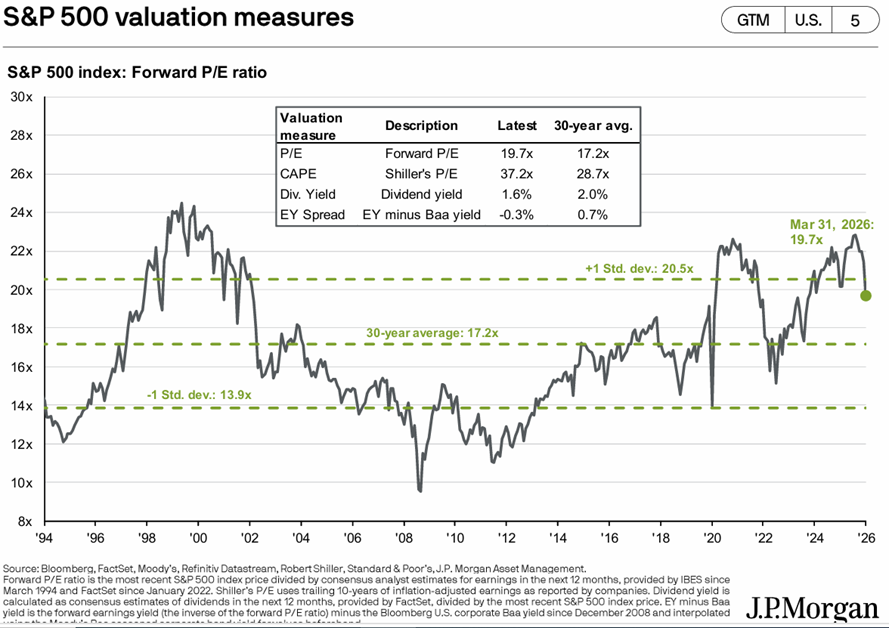
Equity market assessment: Equity markets are correcting with the escalation of the war in Iran and the disruptions caused by the closure of the Strait of Hormuz.

The stock markets of all countries corrected with the war in Iran, with greater intensity in growth and technology stocks.

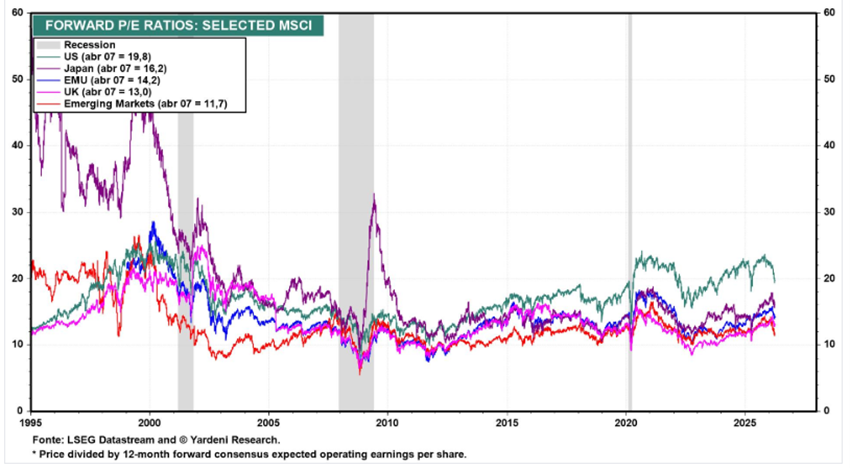
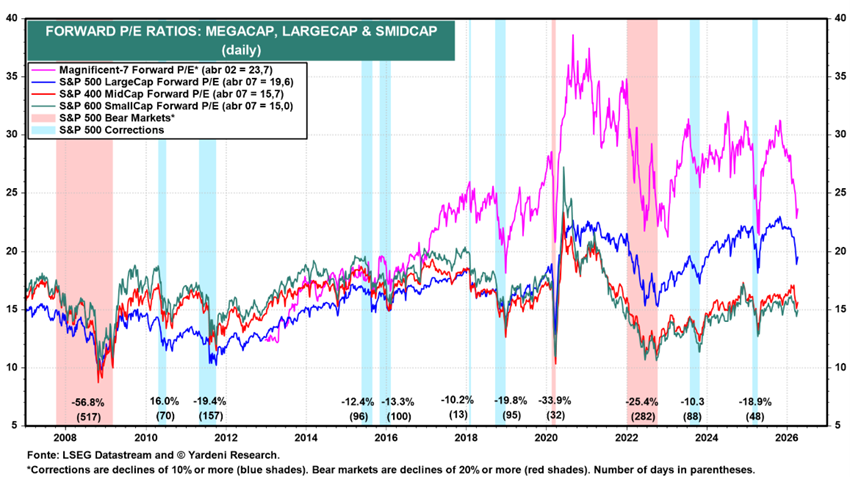
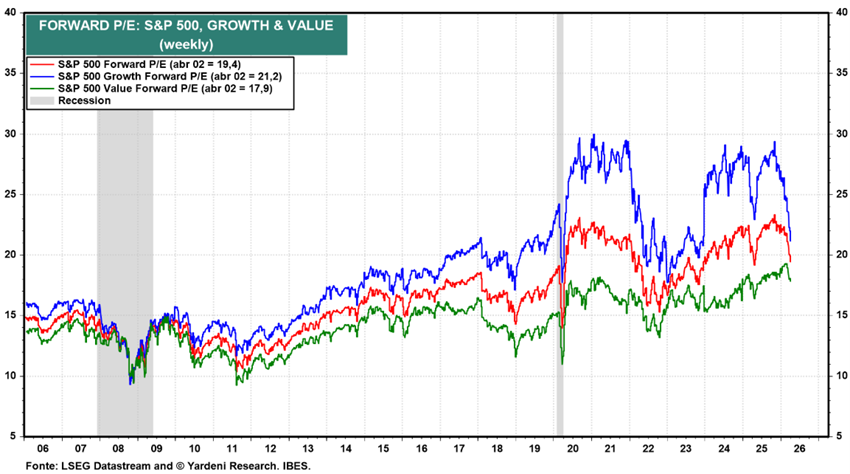
The 19.7x PER forward for the U.S. is still above the long-term average.

Japan’s PER is at 16.2x, Eurozone’s at 14.2x, 13.0x for the UK and 11.7x in emerging markets.

The PER of mid-cap and small-cap US stocks are at 15.0x to 15.7x, respectively, slightly above the long-term average.

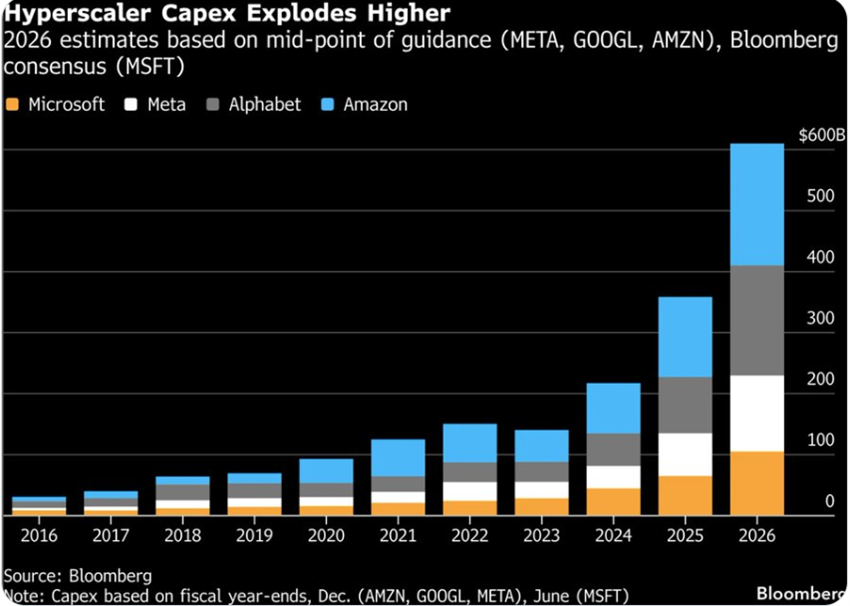
The six largest US hyperscalers (including Microsoft, Alphabet, Meta, Amazon and Oracle) will spend more than $600 billion on AI infrastructure in 2026 – almost six times 2022 levels, which raises concerns that this will be “too much, too fast”.
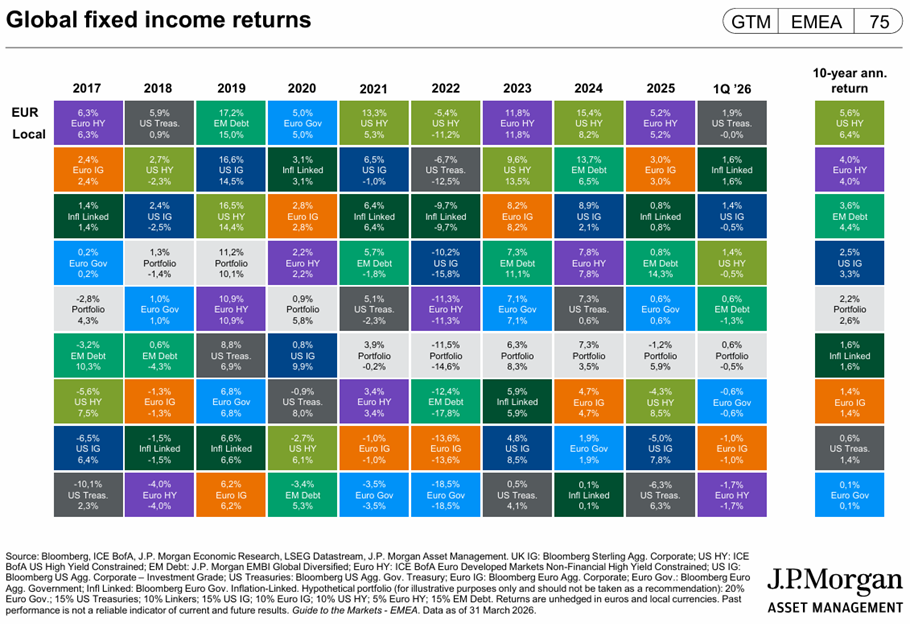
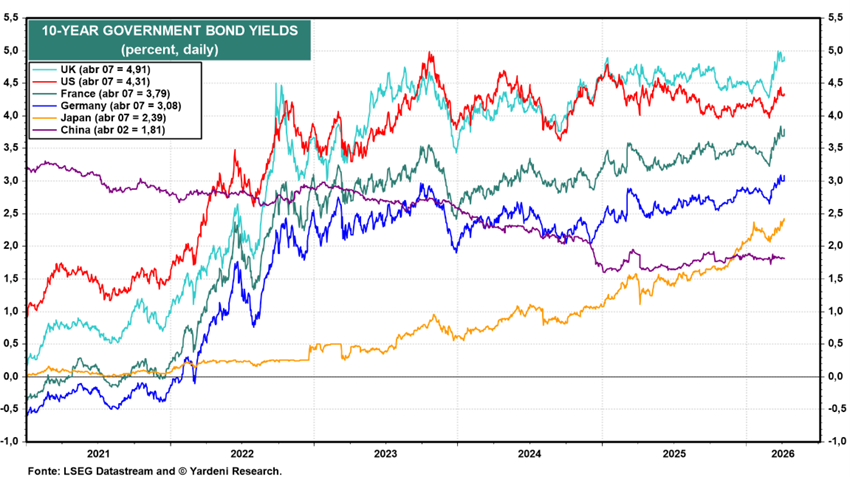
Bond market assessment: Long interest rates rose on the back of rising geopolitical risks and a possible rise in inflation.

Rising long-term interest rates and a slight rise in credit spreads have led to a devaluation of bond investments.
Key opportunities: The swift outcome of the war in Iran.

The Strait of Hormuz is one of the world’s most important commercial arteries, through which one-fifth of global offshore oil and gas is transported from production facilities and refineries in the Gulf to buyers around the world.

In the scenario of a quick outcome of the war in Iran, avoiding the destruction of more energy infrastructure in the region and resuming transport and trade via the Strait of Hormuz, the markets will react very positively, recovering much of the losses recorded, given the favorable global macro environment.
Main risks: The prolongation of the war in Iran for several months.

This crisis represents one of the biggest shocks to the oil market, with the potential for further increases if the disruption in the Strait of Hormuz continues.

Prolonged high oil prices test global resilience, increasing risks to growth, inflation and monetary policy.

The sharp increase in energy prices risks causing a “stagflationary” shock to the European economy.
Previous Post

1Q26 Financial Markets Outlook: The story of the last few quarters repeats itself with stock markets close to highs, leadership of big tech, and resumption of interest rate reductions by the Fed

Next Post

3Q26 Financial Markets Outlook: Huge tech spending, more trade tariffs and a war that is hard to end

Feria

Feria

Related Posts

3Q26 Financial Markets Outlook: Huge tech spending, more trade tariffs and a war that is hard to end
Investing

3Q26 Financial Markets Outlook: Huge tech spending, more trade tariffs and a war that is hard to end

24 de July, 2026
1Q26 Financial Markets Outlook: The story of the last few quarters repeats itself with stock markets close to highs, leadership of big tech, and resumption of interest rate reductions by the Fed
Investing

1Q26 Financial Markets Outlook: The story of the last few quarters repeats itself with stock markets close to highs, leadership of big tech, and resumption of interest rate reductions by the Fed

22 de January, 2026
Financial Markets Outlook 2026: S&P 500 price targets btw 7.100 e 8.000 (+5% a +15%), and US official interest rates circa 3,5%
Investing

Financial Markets Outlook 2026: S&P 500 price targets btw 7.100 e 8.000 (+5% a +15%), and US official interest rates circa 3,5%

19 de December, 2025
4Q25 Financial Markets Outlook: Stock markets near highs, big tech leadership, and resumption of interest rate cuts by the Fed
Investing

4Q25 Financial Markets Outlook: Stock markets near highs, big tech leadership, and resumption of interest rate cuts by the Fed

23 de October, 2025
3Q25 Financial Markets Outlook: Trump’s “big, beautiful bill” and the impacts on tariffs, inflation, interest rates and markets
Investing

3Q25 Financial Markets Outlook: Trump’s “big, beautiful bill” and the impacts on tariffs, inflation, interest rates and markets

6 de July, 2025
Effects of Trump’s Trade Tariffs on Financial Investments Series: P1 – Framework
Investing

Effects of Trump’s Trade Tariffs on Financial Investments Series: P1 – Framework

8 de May, 2025
Next Post
3Q26 Financial Markets Outlook: Huge tech spending, more trade tariffs and a war that is hard to end

3Q26 Financial Markets Outlook: Huge tech spending, more trade tariffs and a war that is hard to end

Leave a Reply

Your email address will not be published. Required fields are marked *

Trending

3Q26 Financial Markets Outlook: Huge tech spending, more trade tariffs and a war that is hard to end

3Q26 Financial Markets Outlook: Huge tech spending, more trade tariffs and a war that is hard to end

24 de July, 2026
2Q26 Financial Markets Outlook: From the rotation of AI-related technologies to the correction of the war in Iran

2Q26 Financial Markets Outlook: From the rotation of AI-related technologies to the correction of the war in Iran

8 de April, 2026
1Q26 Financial Markets Outlook: The story of the last few quarters repeats itself with stock markets close to highs, leadership of big tech, and resumption of interest rate reductions by the Fed

1Q26 Financial Markets Outlook: The story of the last few quarters repeats itself with stock markets close to highs, leadership of big tech, and resumption of interest rate reductions by the Fed

22 de January, 2026
Financial Markets Outlook 2026: S&P 500 price targets btw 7.100 e 8.000 (+5% a +15%), and US official interest rates circa 3,5%

Financial Markets Outlook 2026: S&P 500 price targets btw 7.100 e 8.000 (+5% a +15%), and US official interest rates circa 3,5%

19 de December, 2025
Investorpolis

We developed this blog because we believe that only a small learning effort is needed to make a big change in the decisions and results of our investments and financial assets.

Main categories

  • Investing Series Guide
  • Wealth and Investing
  • Retirement & Savings
  • Tools
  • More

Newsletter

Sign to our mailing list to receive updates direct to your inbox!

*We don’t spam

  • Privacy Policy
  • Cookie Policy
  • Contacts

© 2021 - Investorpolis / Powered by Delta Soluções

  • pt-pt Português
  • fr Français
  • es Español
  • en English
  • Home
  • Investing Series Guide
    • I. Goal Based Investing
    • II. Compounding & Inflation
    • III. Assets Risks & Returns
    • IV. Efficient Diversification
    • IX. Sustainable Investing and ESG
    • V. The Investor
    • VI. Assets and Investments
    • VII. Index Funds
    • VIII. Successful Investing
    • X. Kits and Tips
    • XI. Other Topics
  • Retirement & Savings
    • Retirement
    • Savings
  • Wealth and Investing
    • Investing
    • Wealth
  • Tools
    • Calculators
    • Publications
    • Sites and apps
  • More
    • Best of
    • Reviews
    • Snapshots
    • Others
  • About us
    • Who we are
    • Mission
  • Login
  • Cart

© 2021 - Investorpolis / Powered by Delta Soluções

Welcome Back!

Login to your account below

Forgotten Password?

Retrieve your password

Please enter your username or email address to reset your password.

Log In
We use cookies on our website to give you the most relevant experience by remembering your preferences and repeat visits. By clicking “Accept All”, you consent to the use of ALL the cookies. However, you may visit "Cookie Settings" to provide a controlled consent.
Cookie configurationCookie PolicyAcceptReject
Manage consent

Privacy Overview

This website uses cookies to improve your experience while you navigate through the website. Out of these, the cookies that are categorized as necessary are stored on your browser as they are essential for the working of basic functionalities of the website. We also use third-party cookies that help us analyze and understand how you use this website. These cookies will be stored in your browser only with your consent. You also have the option to opt-out of these cookies. But opting out of some of these cookies may affect your browsing experience.
Advertisement
Advertisement cookies are used to provide visitors with relevant ads and marketing campaigns. These cookies track visitors across websites and collect information to provide customized ads.
Analytics
Analytical cookies are used to understand how visitors interact with the website. These cookies help provide information on metrics the number of visitors, bounce rate, traffic source, etc.
Functional
Functional cookies help to perform certain functionalities like sharing the content of the website on social media platforms, collect feedbacks, and other third-party features.
Necessary
Necessary cookies are absolutely essential for the website to function properly. These cookies ensure basic functionalities and security features of the website, anonymously.
Others
Other uncategorized cookies are those that are being analyzed and have not been classified into a category as yet.
Performance
Performance cookies are used to understand and analyze the key performance indexes of the website which helps in delivering a better user experience for the visitors.
SAVE & ACCEPT

Add New Playlist

Are you sure want to unlock this post?
Unlock left : 0
Are you sure want to cancel subscription?