The first quarter began with a rotation of AI-related technologies to other sectors, followed by the war in Iran, which caused a huge increase in the price of oil and economic and financial destabilization around the world.
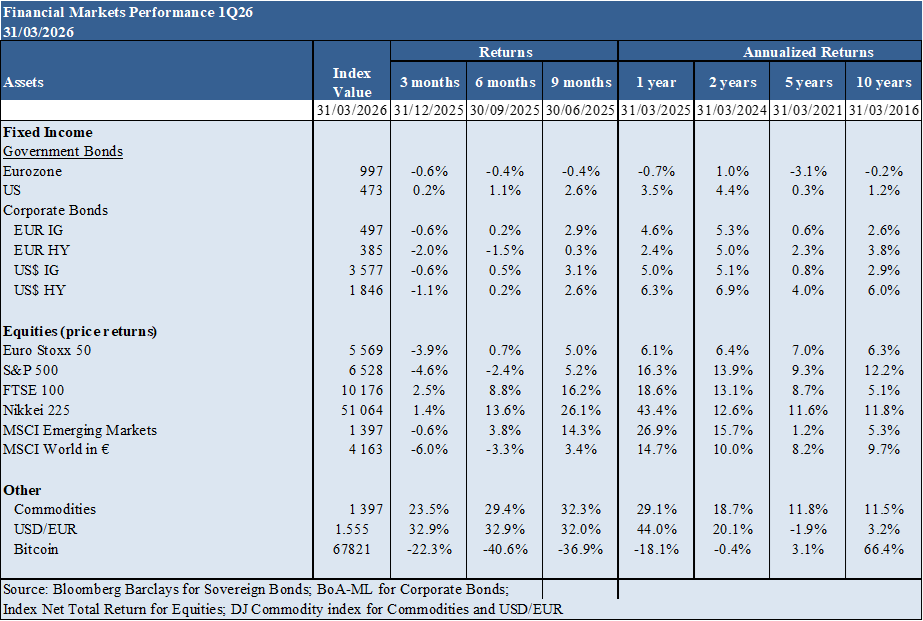
Financial markets performance 1Q26: Stocks in developed countries have fallen on the sharp rise in oil prices and the economic and geopolitical instability associated with the war in Iran.
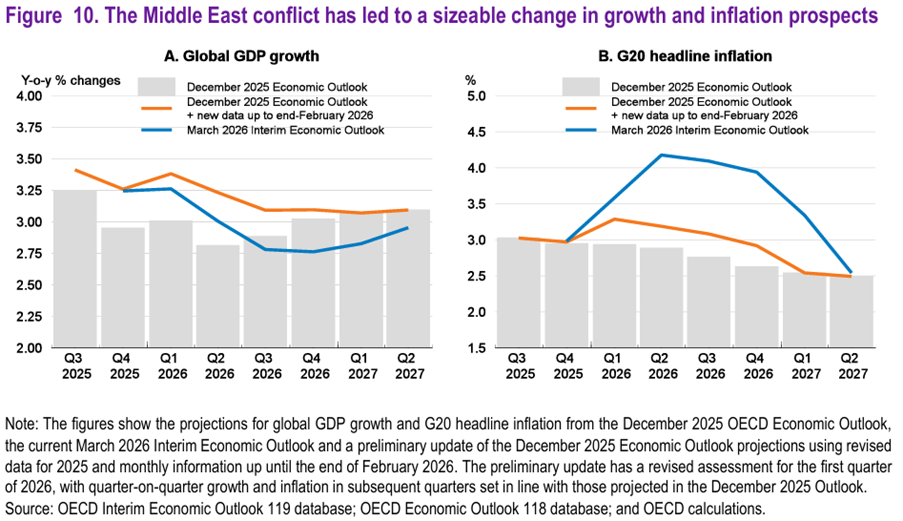
Macro Context: Macro forecasts are very dependent on the duration and outcome of the war in Iran, which has already caused a decline in economic growth and a rise in inflation expected in the main economies.
Micro Context: Leading instantaneous and advanced economic indicators show declines as a result of the war.
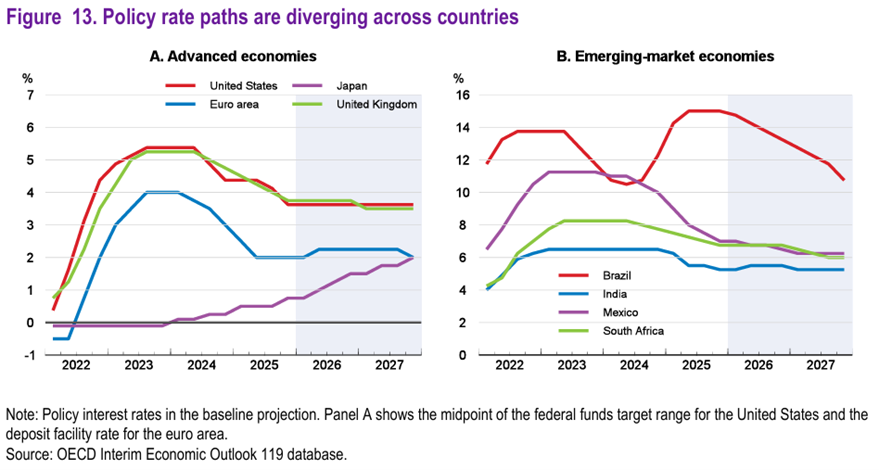
Economic policies: All central banks in major developed countries have maintained and are expected to keep official interest rate levels stable in 2026, but are mindful of any change in circumstances arising from the war in Iran.
Equity markets: Equity markets enter a correction with the escalation of the war in Iran and the disruptions caused by the closure of the Strait of Hormuz.
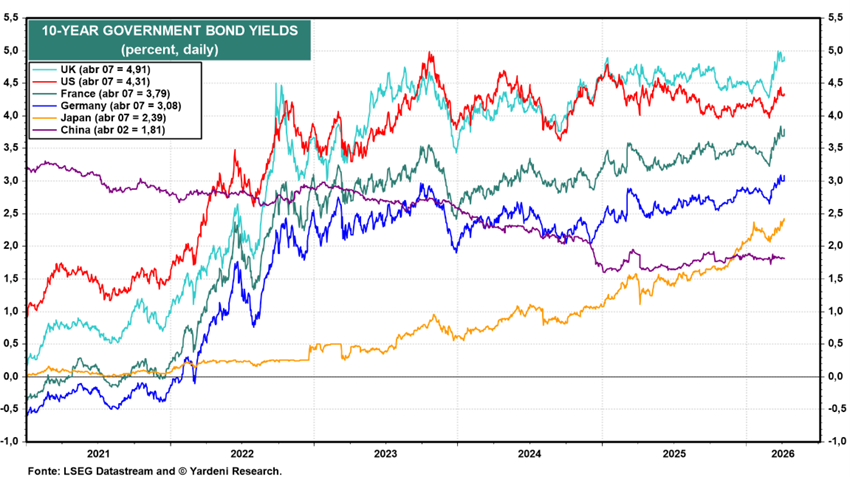
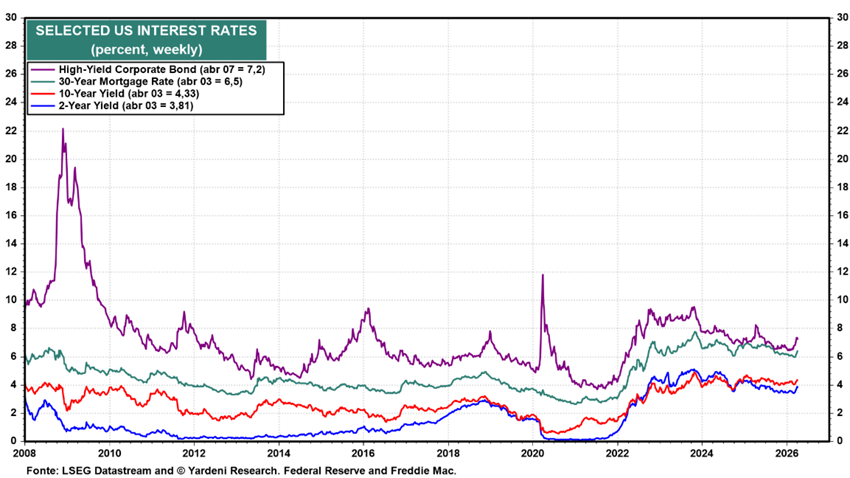
Bond markets: Long interest rates rose on the back of rising geopolitical risks and a possible rise in inflation.
Key opportunities: The swift outcome of the war in Iran.
Main risks: The prolongation of the war in Iran for several months.
Financial markets are very dependent on the evolution of the war in Iran, given the possible effects on economic growth and inflation.
Financial markets performance 1Q26: Developed country stocks fell on the sharp rise in oil prices and the economic and geopolitical instability associated with the war in Iran.
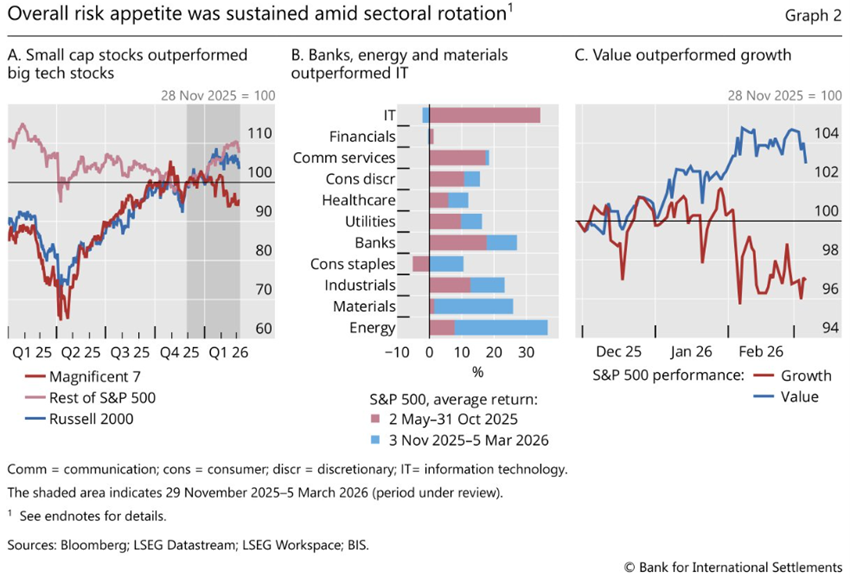
At the beginning of 2026, tech stocks experienced a volatile moment, characterized by a sharp rotation, moving away from large-cap software leaders to energy, materials, and small-cap stocks.
Investors reacted to “AI fatigue” and skepticism about the ROI of huge spending on artificial intelligence infrastructure.
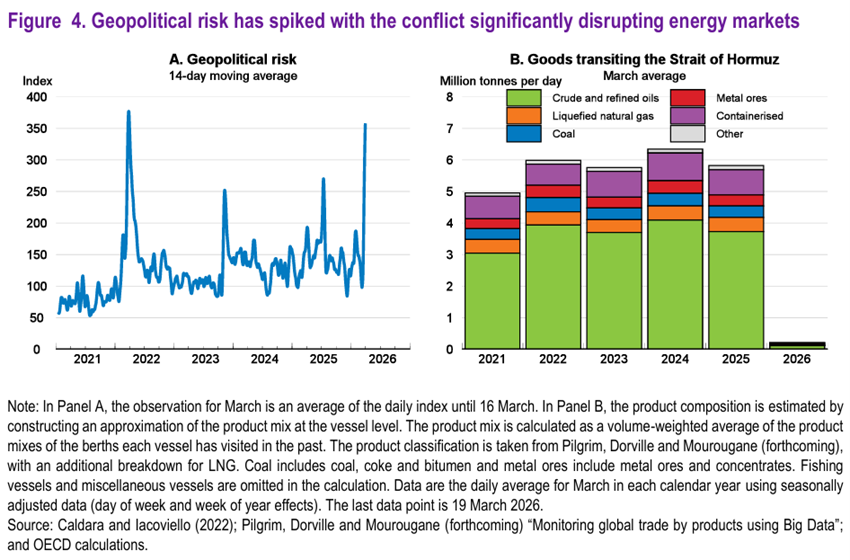
The war in Iran has caused oil prices and geopolitical risk premia to rise to levels recorded during the First Gulf War in 1990 and the Russia-Ukraine conflict in 2022.
In March 2026, oil prices soared to almost $120/barrel (from $65/barrel) due to conflicts in the Middle East, causing major economic and financial instability.
This morning, Trump’s announcement of a two-week ceasefire resulted in a 15% drop in the price of oil.
.
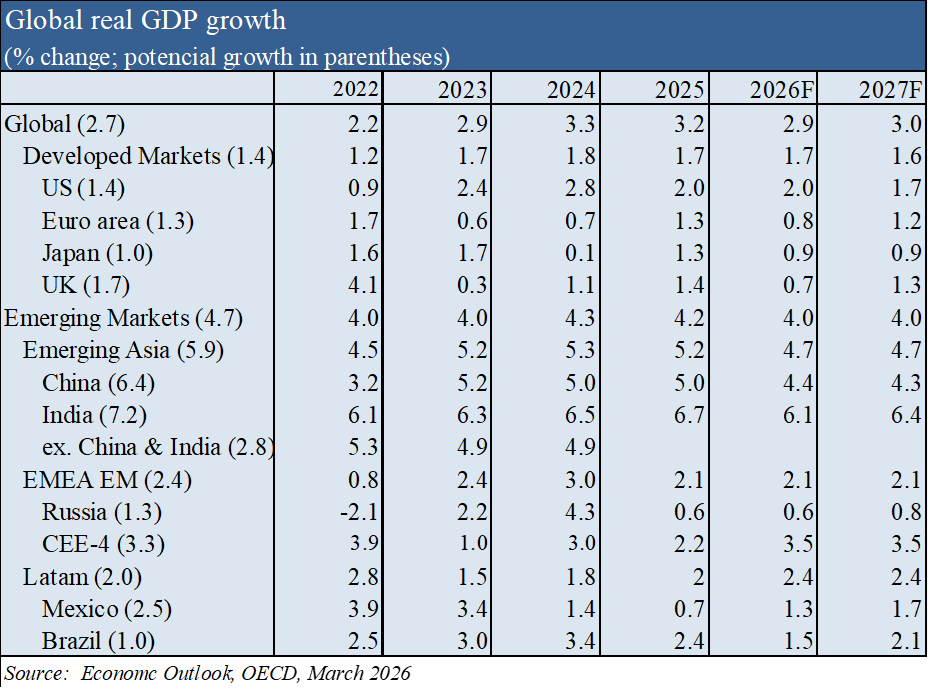
Macroeconomic context: Macroeconomic forecasts are very dependent on the duration and outcome of the war in Iran, which has already led to a decline in economic growth and a rise in inflation expected in the main economies.
Global GDP growth is projected to decline to 2.9% in 2026 before rising to 3.0% in 2027, assuming that the current extent of the energy market disruption moderates over time, with oil, gas and fertiliser prices gradually declining from mid-2026.
Annual GDP growth in the United States is projected to moderate from 2.0% in 2026 to 1.7% in 2027, as strong AI-related investment is gradually offset by a slowdown in real income growth and consumer consumption.
Eurozone GDP growth is forecast to slow to 0.8% in 2026 as higher energy prices weigh on activity, before rising to 1.2% in 2027, driven by an increase in defence spending.
In China, growth is forecast to slow to 4.4% in 2026 and 4.3% in 2027.
Core inflation in the G20 advanced economies is projected to decline from 2.6% in 2026 to 2.3% in 2027.
The war in Iran and the rising price of oil risks triggering global inflation, reducing GDP growth and potentially causing a recession if prices remain high, with Europe and Asia being the most vulnerable.
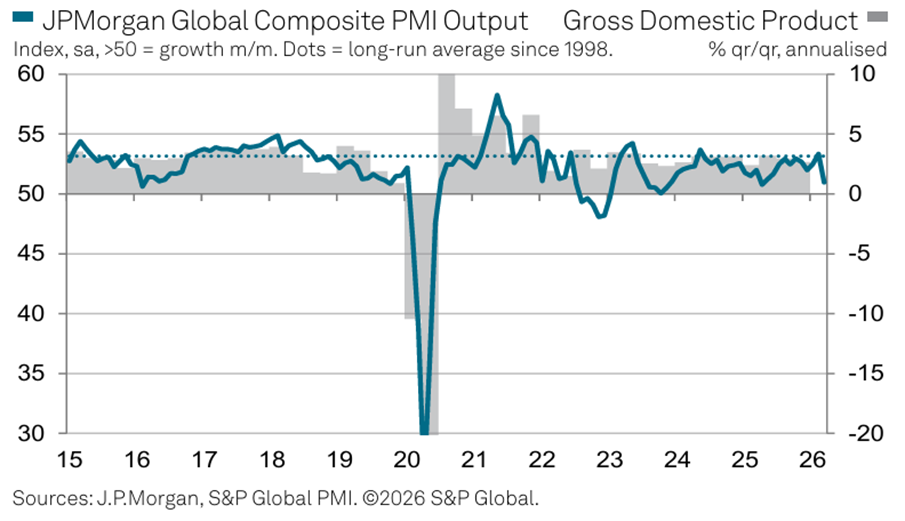
Microeconomic context: Key instant and forward economic indicators are expanding slightly around the world, with some cooling in recent months.
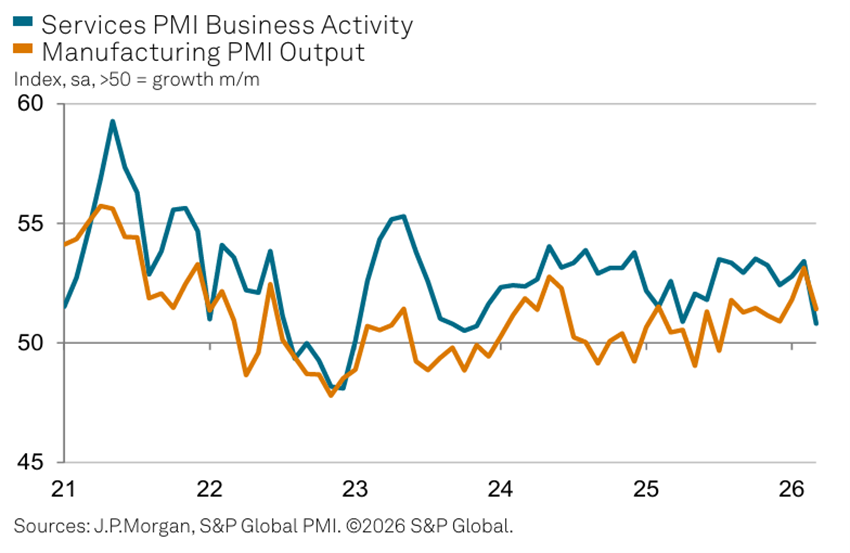
Output expansion rates slowed down in the manufacturing and services sectors, reaching 3-month and 28-month lows respectively.
The Global Manufacturing Index registered 51.4 and the Global Services Business Activity Index 50.8.
March was the first time since December 2022 that the reading of the manufacturing index was higher than the equivalent in services.
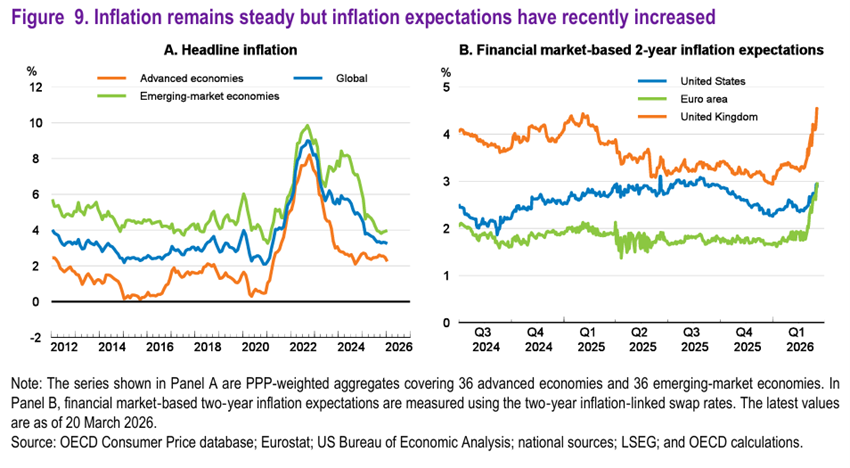
Economic policies: All central banks in major developed countries have maintained and are expected to keep official interest rate levels stable in 2026, but keeping an eye on any change in circumstances arising from the war in Iran.
Official interest rates in the US, Eurozone and UK are expected to remain at current levels in 2026.
In the face of the energy price shock, central banks will remain vigilant to ensure that inflation expectations remain well anchored.
Monetary policy adjustments may be necessary if price pressures broaden or if the growth outlook weakens substantially.
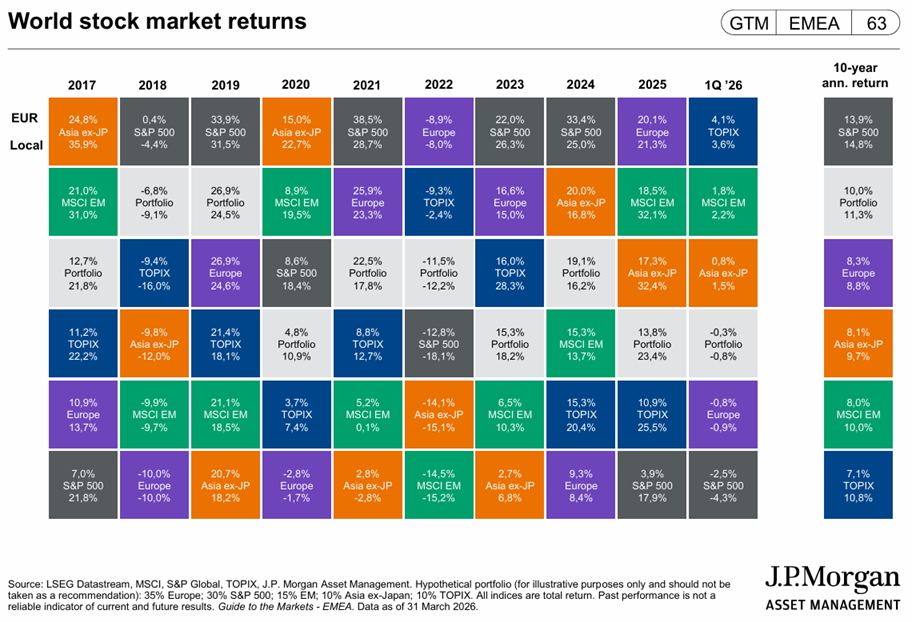
Equity market assessment: Equity markets are correcting with the escalation of the war in Iran and the disruptions caused by the closure of the Strait of Hormuz.
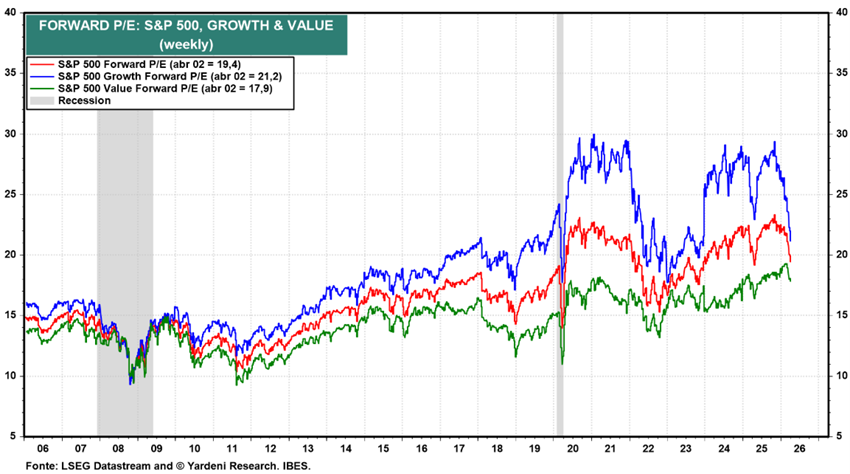
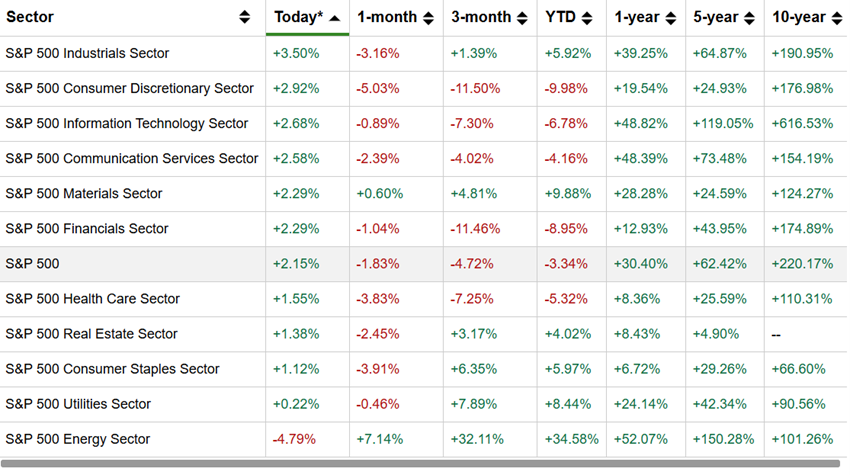
The stock markets of all countries corrected with the war in Iran, with greater intensity in growth and technology stocks.
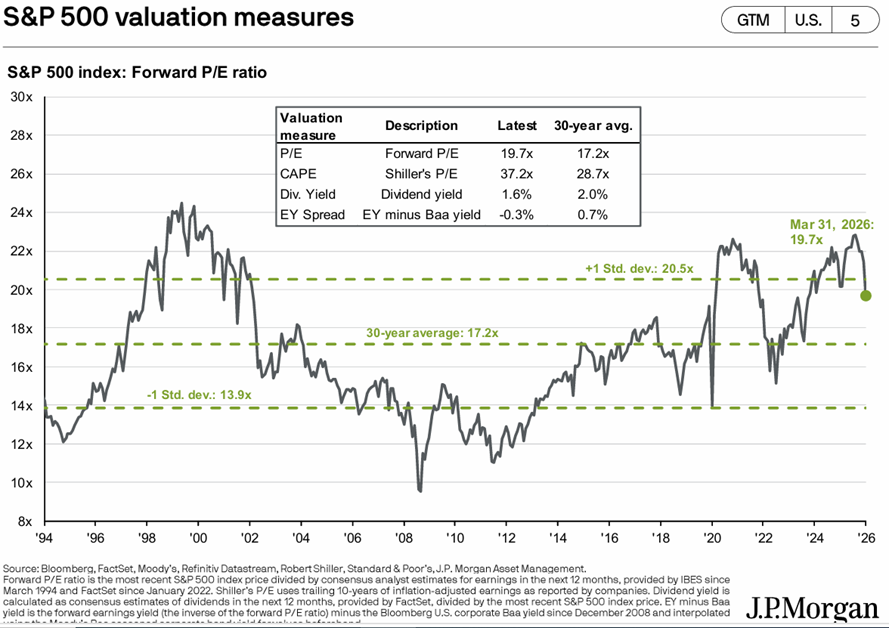
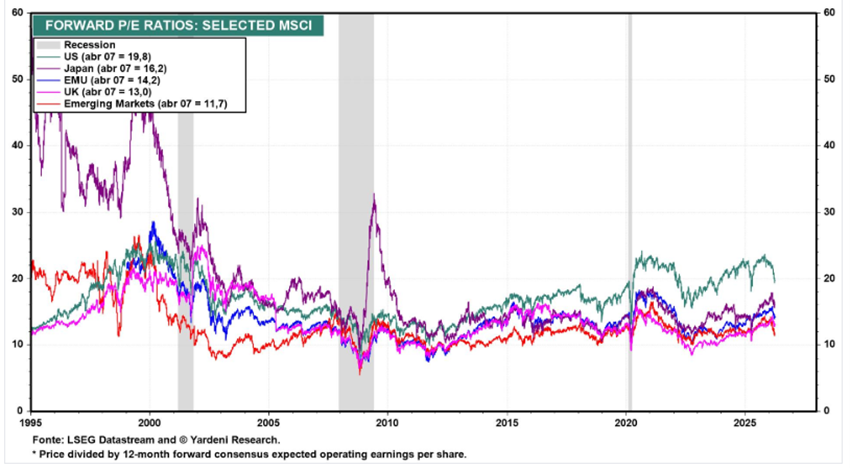
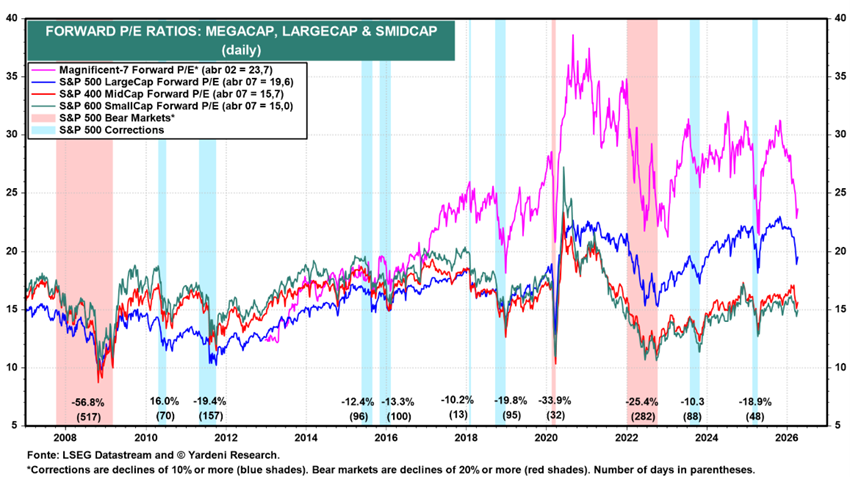
The 19.7x PER forward for the U.S. is still above the long-term average.
Japan’s PER is at 16.2x, Eurozone’s at 14.2x, 13.0x for the UK and 11.7x in emerging markets.
The PER of mid-cap and small-cap US stocks are at 15.0x to 15.7x, respectively, slightly above the long-term average.
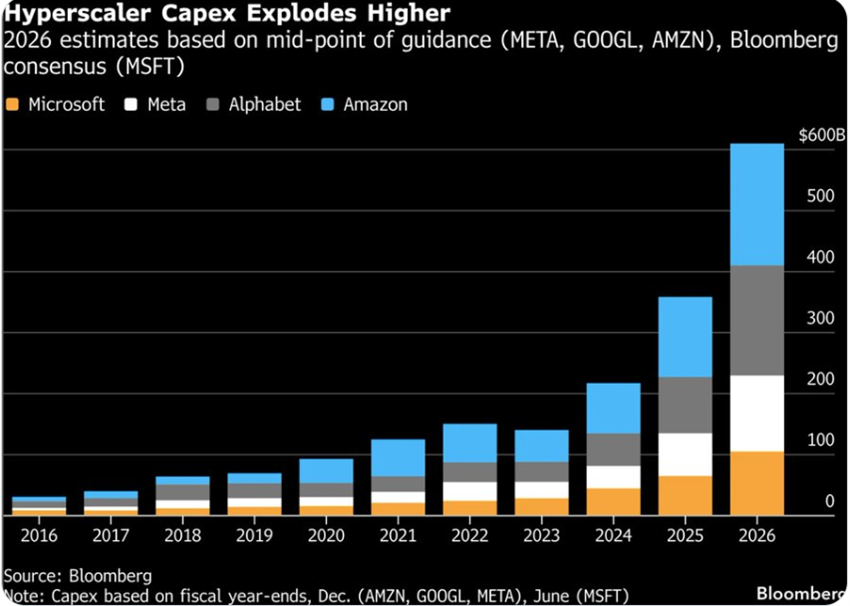
The six largest US hyperscalers (including Microsoft, Alphabet, Meta, Amazon and Oracle) will spend more than $600 billion on AI infrastructure in 2026 – almost six times 2022 levels, which raises concerns that this will be “too much, too fast”.
Bond market assessment: Long interest rates rose on the back of rising geopolitical risks and a possible rise in inflation.
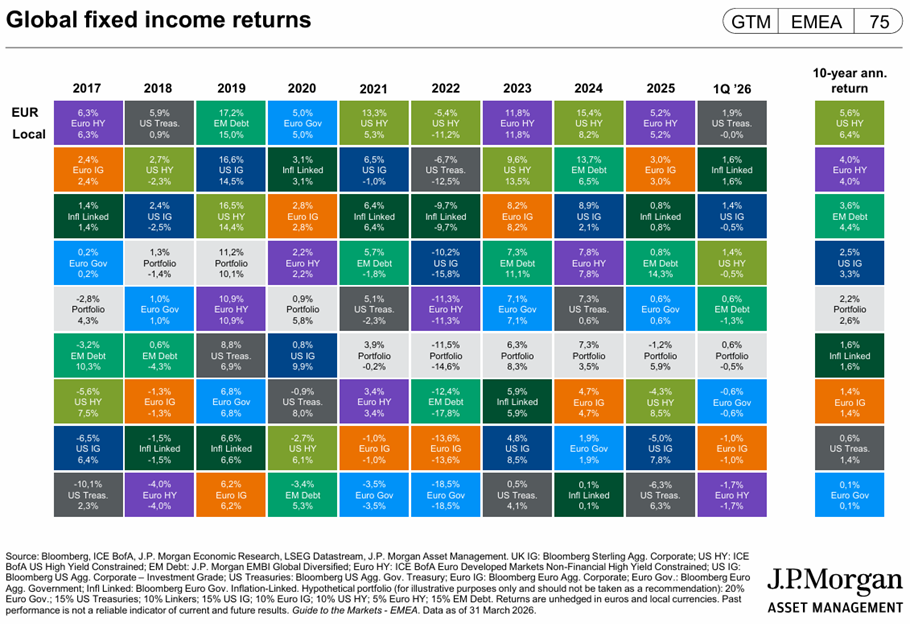
Rising long-term interest rates and a slight rise in credit spreads have led to a devaluation of bond investments.
Key opportunities: The swift outcome of the war in Iran.
The Strait of Hormuz is one of the world’s most important commercial arteries, through which one-fifth of global offshore oil and gas is transported from production facilities and refineries in the Gulf to buyers around the world.
In the scenario of a quick outcome of the war in Iran, avoiding the destruction of more energy infrastructure in the region and resuming transport and trade via the Strait of Hormuz, the markets will react very positively, recovering much of the losses recorded, given the favorable global macro environment.
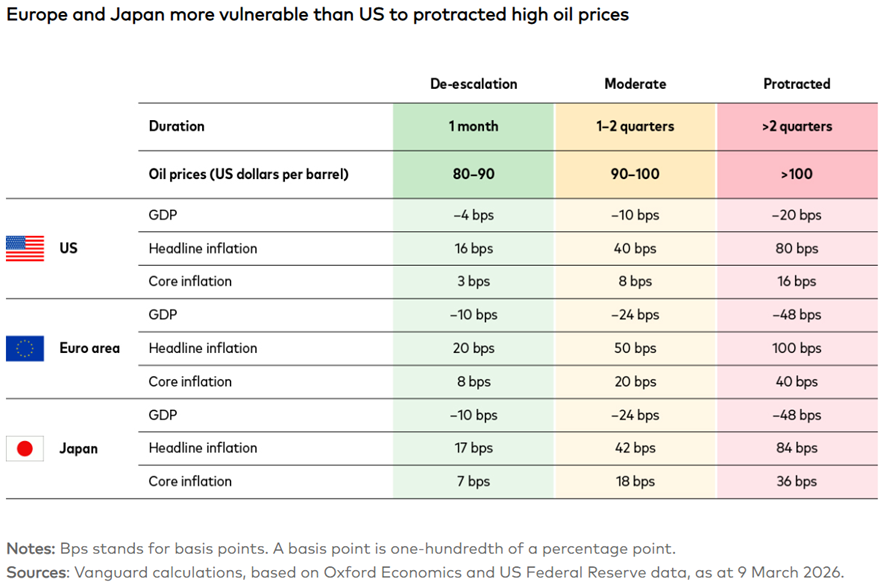
Main risks: The prolongation of the war in Iran for several months.
This crisis represents one of the biggest shocks to the oil market, with the potential for further increases if the disruption in the Strait of Hormuz continues.
Prolonged high oil prices test global resilience, increasing risks to growth, inflation and monetary policy.
The sharp increase in energy prices risks causing a “stagflationary” shock to the European economy.