Stock markets recovered in the second quarter, with the ceasefire of the war in Iran (which broke after a few days).
Performance 2Q26 Markets: Developed countries’ stocks have risen with the ceasefire of the war in Iran
Macro Context : Macroeconomic forecasts have recovered due to the likely outcome of the war in Iran and the fall in oil prices.
Micro Context : Key immediate and leading economic indicators rose as a result of the ceasefire.
Economic policies: The central banks of the main developed countries maintain vigilance over the increase in inflation, admitting the rise in official interest rates in 2026.
Stock markets : Stock markets rose following the end of the war in Iran and the reopening of the Strait of Hormuz .
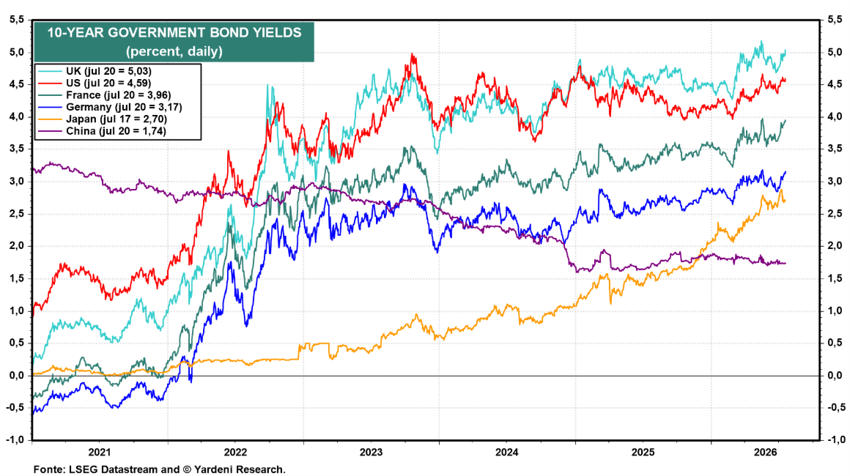
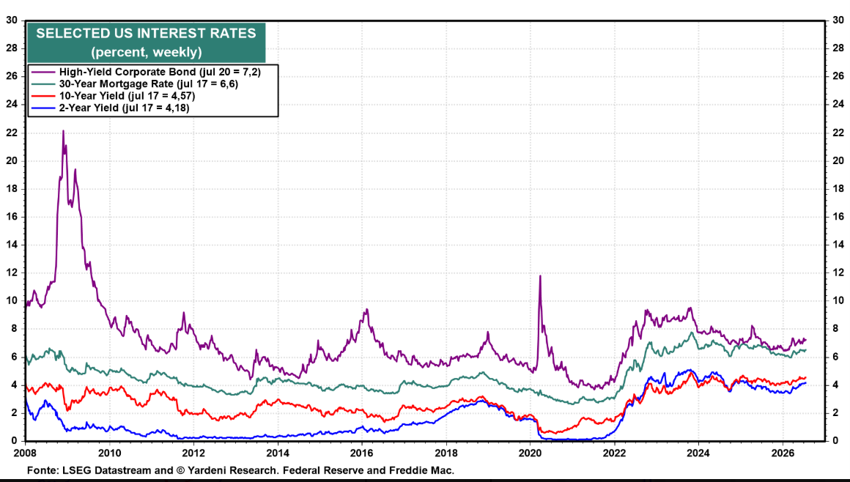
Securities markets : Long-term interest rates remained stable.
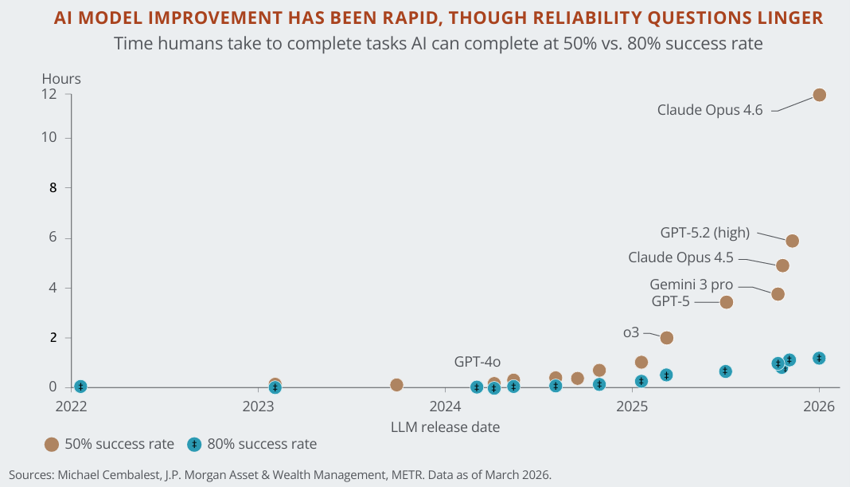
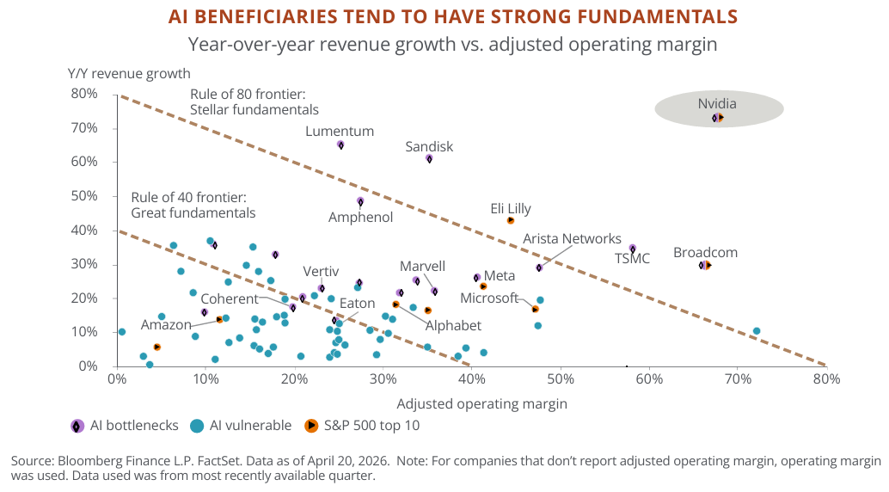
Key opportunities : Continued appreciation of American technology stocks, coinciding with the unfolding AI cycle, in a context where the premium these stocks hold over the overall market is at attractive levels.
Main risks : The Iran war has been prolonged for several months.
Financial markets are very dependent on the evolution of the war in Iran, given the possible effects on economic growth and inflation.
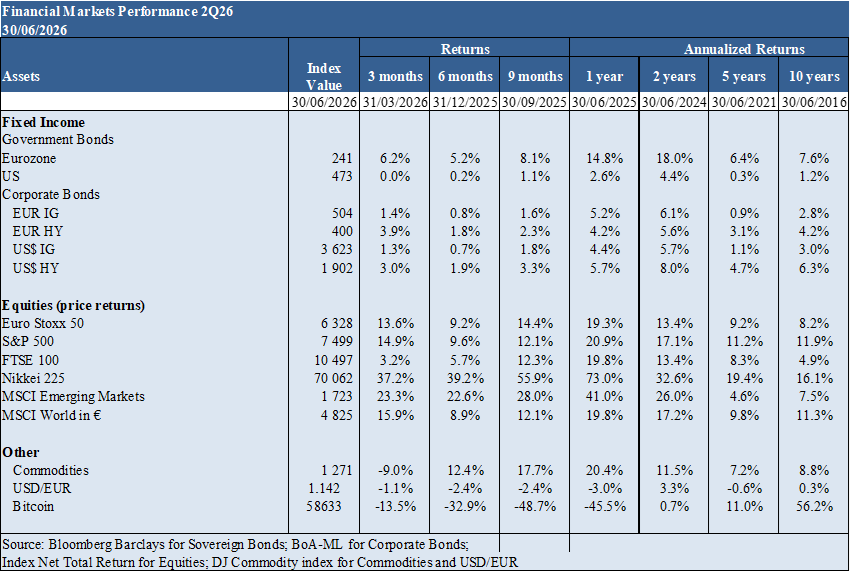
Financial markets performance 2Q26: Developed country stocks rose on the ceasefire of the war in Iran.
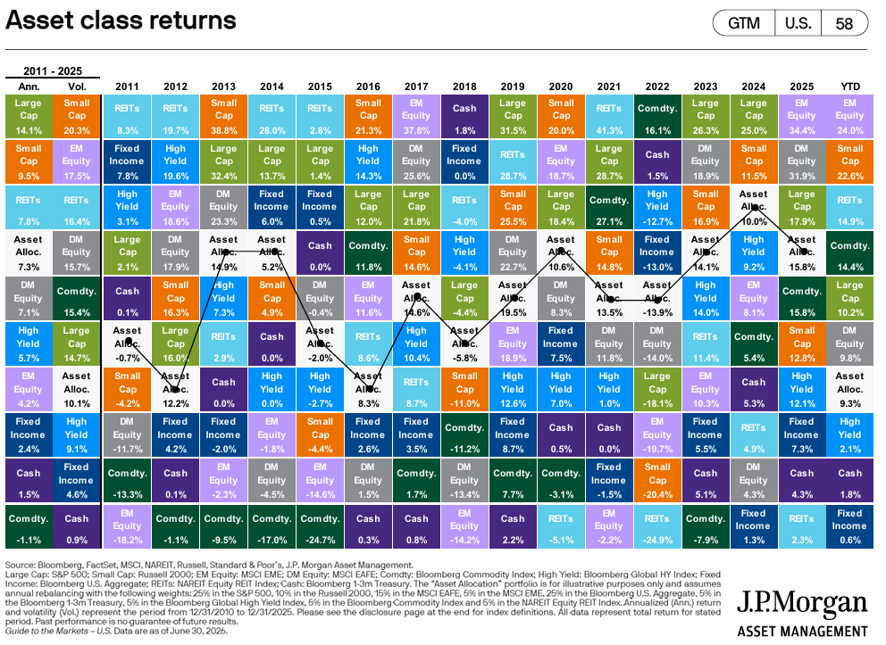
In the second quarter, global markets were characterised by a strong rotation back to artificial intelligence (AI), falling oil prices as tensions in the Middle East ease, and divergent regional performance.
European stocks hit all-time highs, while bond markets rebounded as geopolitical risks and inflation concerns moderated.
Global stocks saw strong gains, led mainly by technology-driven growth and spending on AI infrastructure.
Energy prices have fallen significantly (Brent crude and headline energy indices have fallen sharply), which has eased some inflationary pressure
.
Macroeconomic context: Macro forecasts have rebounded with the likely outcome of the war in Iran and lower oil prices
Financial markets face increased risk, driven by rising oil prices due to tensions in the Middle East, concerns about heavy spending on technology capital and new global tariffs. Central banks such as the Federal Reserve and the ECB tend to be aggressive or remain stable as inflation risks persist.
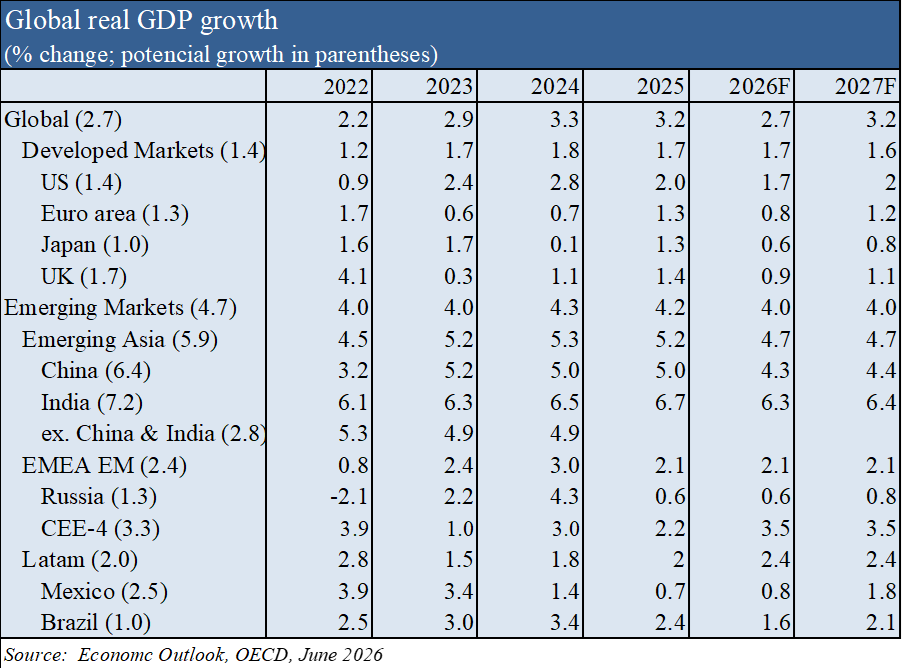
Assuming that energy prices decline gradually from mid-2026, in line with current futures market expectations, the OECD projects global economic growth to slow from 3.4% in 2025 to 2.8% in 2026, before recovering to 3.1% in 2027.
Annual consumer price inflation in G20 countries is expected to rise to 4.0% in 2026 from 3.4% in 2025 before declining to 3.1% in 2027 as energy and food price pressures gradually ease.
However, the longer the disruptions last, the greater the economic and social costs.
If disruptions persist well into 2027, global growth is expected to slow significantly, to just 2.1% in 2026 and 1.8% in 2027, potentially pushing some economies into or near recession. Headline inflation would increase by 0.4 percentage points in 2026 and by 1.3 percentage points in 2027.
Microeconomic context: Key instantaneous and leading economic indicators rose as a result of the ceasefire.
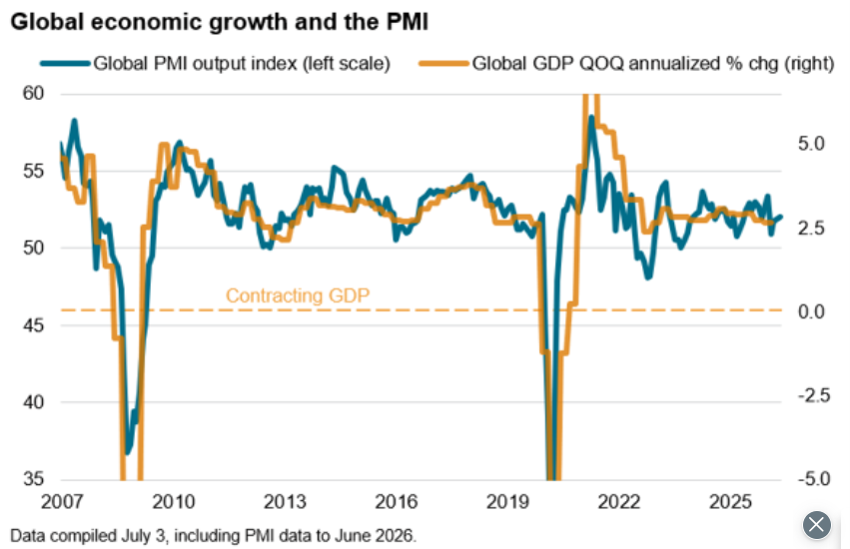
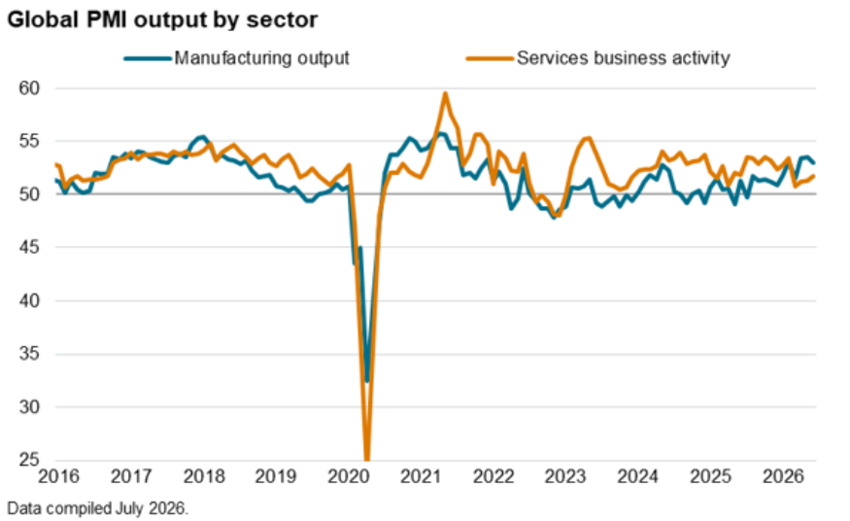
The overall industrial production index registered 53.0 in June and the Services activity index rose to 51.7.
The data show that business activity growth bottomed out in March and has since shown encouraging resilience.
The PMI readings broadly indicate headline GDP growth at an annualized rate of 2.5% in the second quarter, down from around 3% at the beginning of the year, but only slightly below the long-term average of 2.9% recorded since 1998.
The June data was collected at a time when oil prices fell sharply and tensions in the Middle East eased, following a ceasefire and the subsequent signing of a Memorandum of Understanding between the US and Iran.
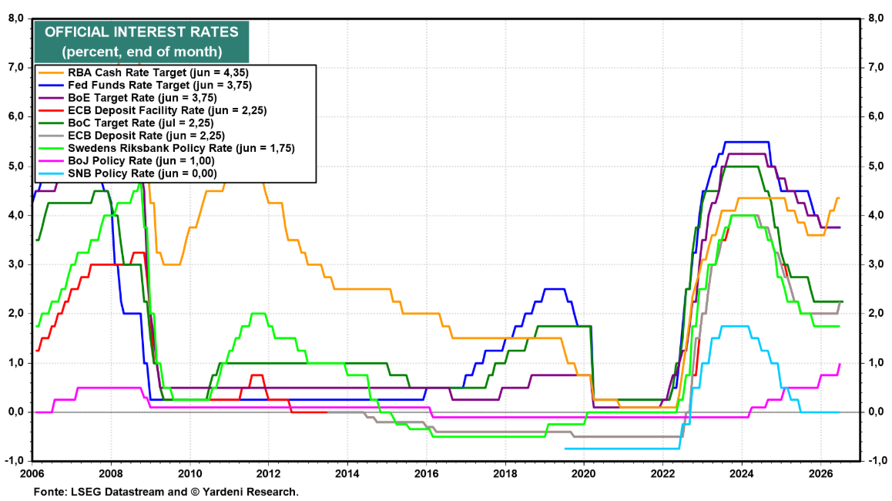
Economic policies: Central banks in major developed countries remain vigilant on rising inflation, admitting official interest rates to rise in 2026.
Official interest rates in the US, Eurozone and UK are expected to remain at current levels in 2026.
In the face of the energy price shock, central banks will remain vigilant to ensure that inflation expectations remain well anchored.
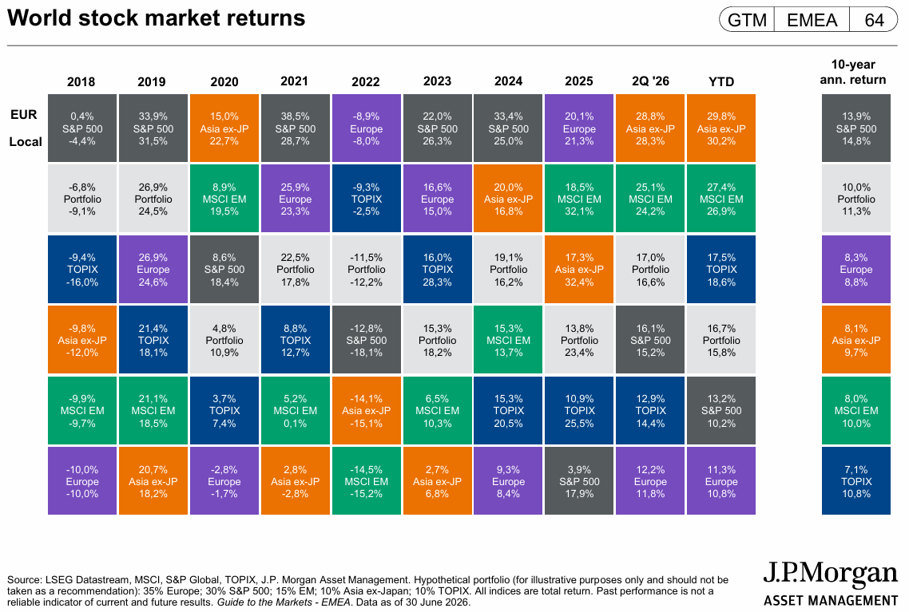
Equity market assessment: Equity markets appreciated with the outcome of the war in Iran and the reopening of the Strait of Hormuz.
The stock markets of all countries recovered with the ceasefire of the war in Iran.
This quarter, one of the largest IPOs ever took place, that of Space X, which valued the company at $1.7 billion. Other major IPOs are expected to take place in the coming months, including that of Anthropic and ChatGPT.
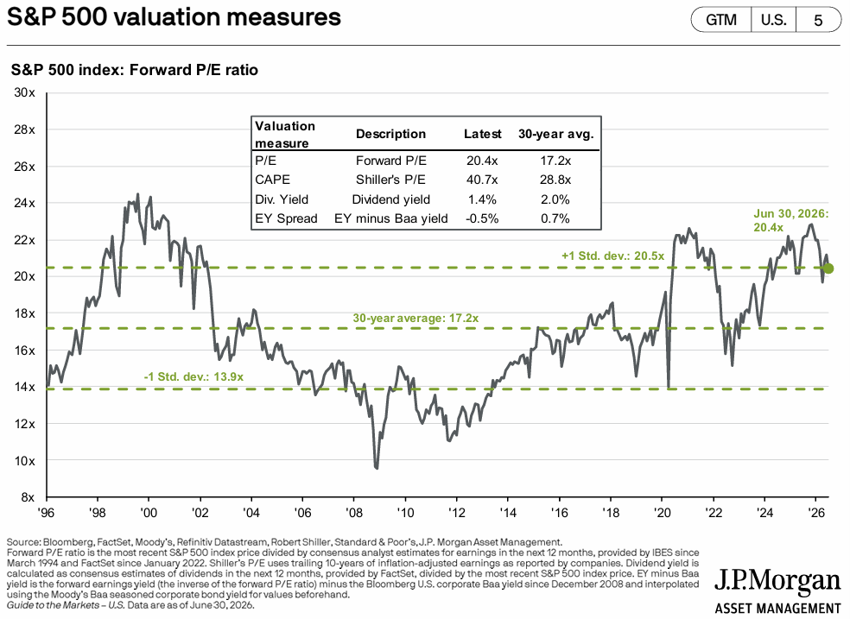
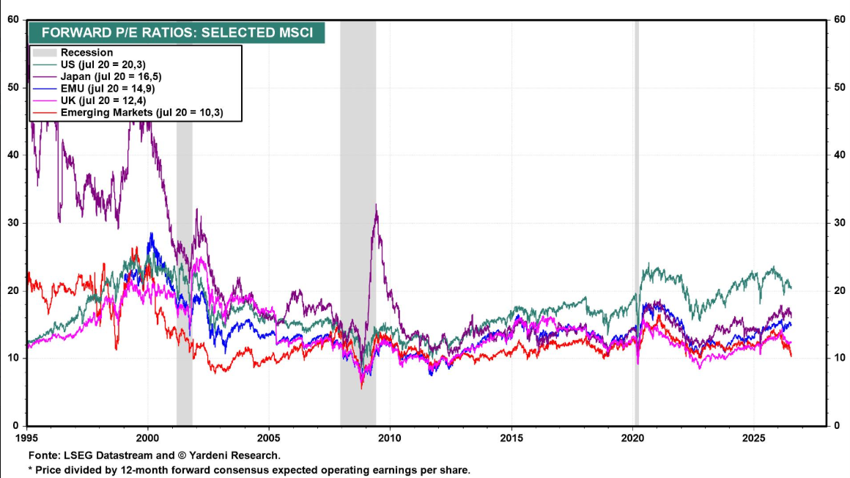
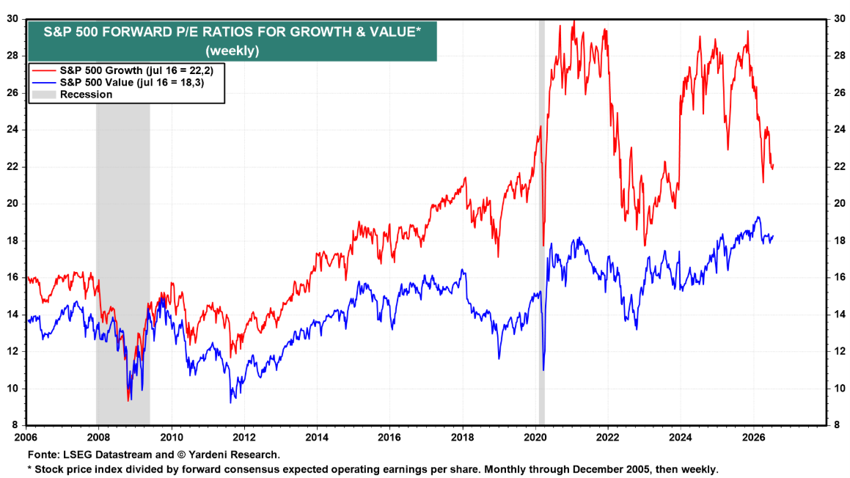
The 20.3x forward PER for the U.S. is still above the long-term average.
Japan’s PER is at 16.5x, Eurozone’s at 14.9x, 12.4x for the UK and 10.3x in emerging markets.
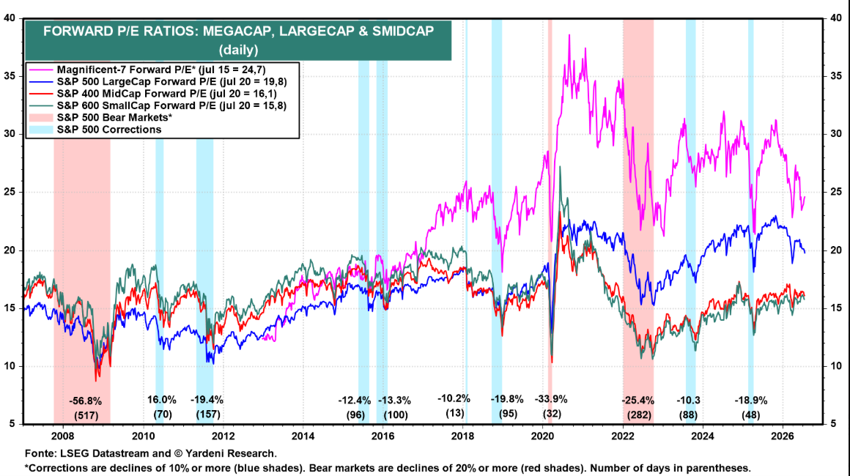
The PER of mid-cap and small-cap US stocks are at 16.1x to 15.8x, respectively, slightly above the long-term average.
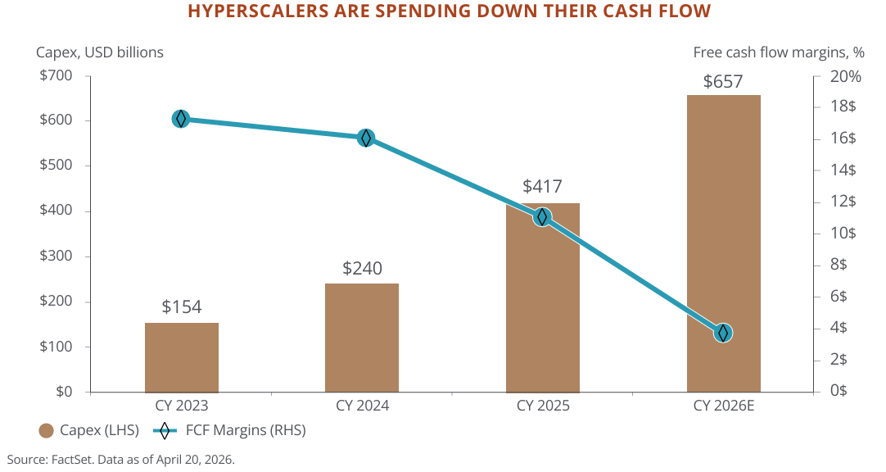
The 12-month free cash flows of the 7 magnificent North American companies will decline sharply from their 2024 peak, due to aggressive investment in data center infrastructure and high-end GPUs.
Bond market assessment: Long interest rates remained stable
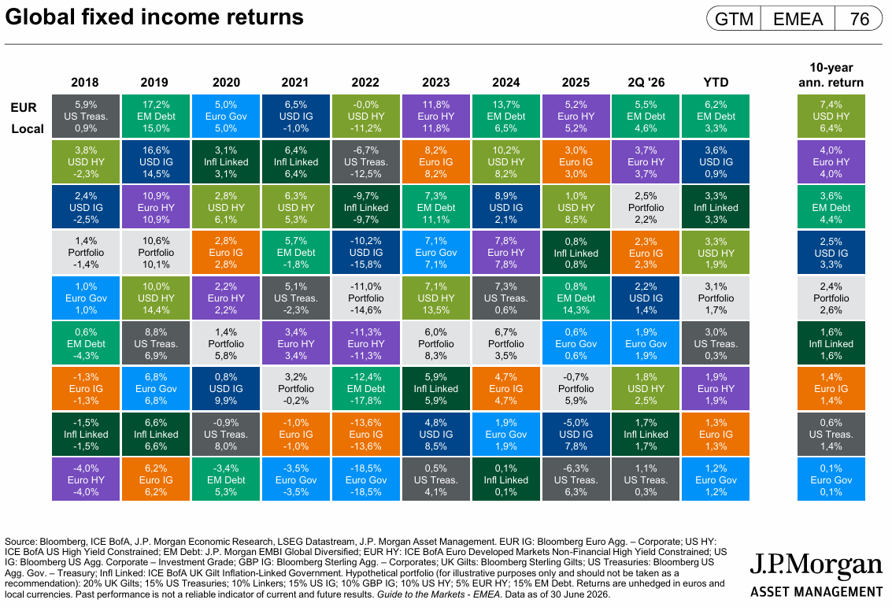
Rising long-term interest rates and a slight rise in credit spreads have led to a devaluation of bond investments.
Key opportunities: Continued appreciation of US tech stocks as the AI cycle unfolds, in a context where the premium of these stocks to the market in general is at attractive levels.
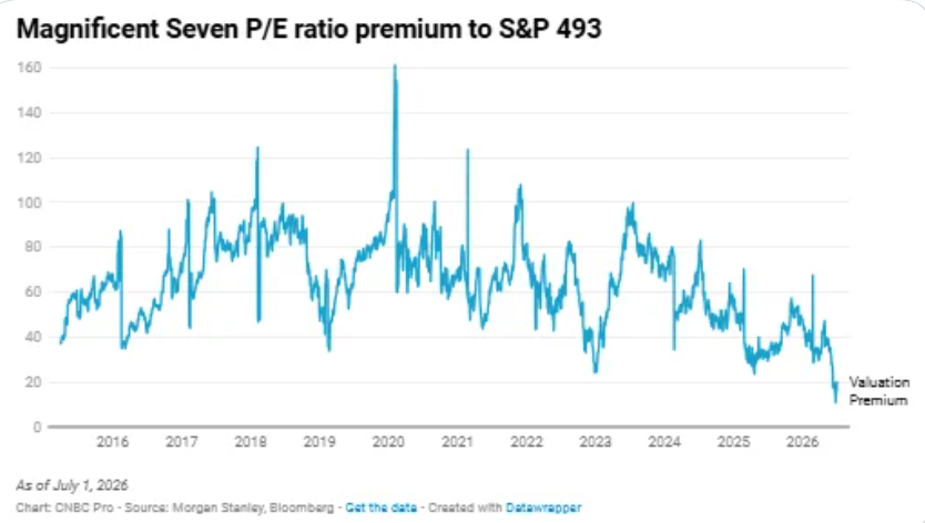
Shares of the 7 magnificent American companies are now trading at their lowest valuation against the S&P 500 in more than a decade, according to Morgan Stanley.
The price-to-earnings multiple premium for these companies relative to the other 493 companies in the S&P 500 remained above 30% for most of the 2020s, but is now closer to 10%.
Main risks: A prolongation of the war in Iran for several months.
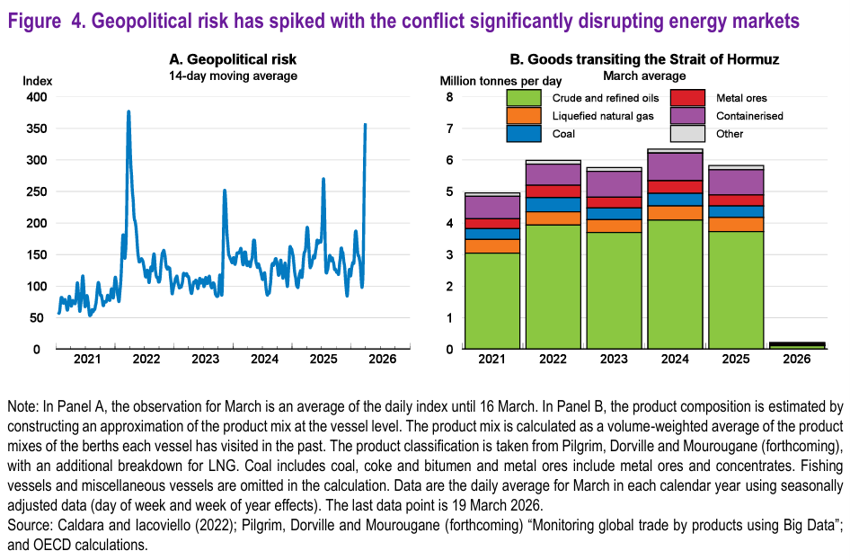
This crisis represents one of the biggest shocks to the oil market, with the potential for further increases if the disruption in the Strait of Hormuz continues.
Prolonged high oil prices test global resilience, increasing risks to growth, inflation and monetary policy.
The sharp increase in energy prices risks causing a “stagflationary” shock to the European economy.