Equity markets reached record levels driven by the growth of AI and technology, simultaneously with high interest rates, stemming from geopolitical risks, rising debt, the cost of living and the price of oil
Performance 3Q26 Markets: The paradox of the simultaneity of record levels of stock markets and interest rates in developed countries.
Macro Context : Economic growth forecasts remain stable, despite worrying signs of inflation and rising debt in major Western economies .
Micro Context : Key immediate and leading economic indicators rose.
Economic policies: Governments and central banks will have to adopt restrictive policies to reduce public deficits and contain debt and inflation .
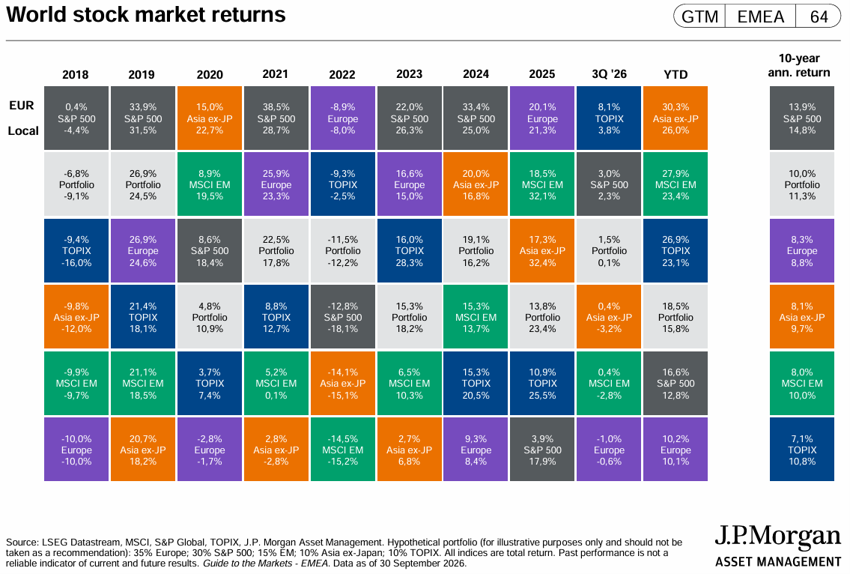
Stock markets : Stock markets hit record highs in developed countries, driven by AI-related companies , with Anthropic’s IPO on the horizon.
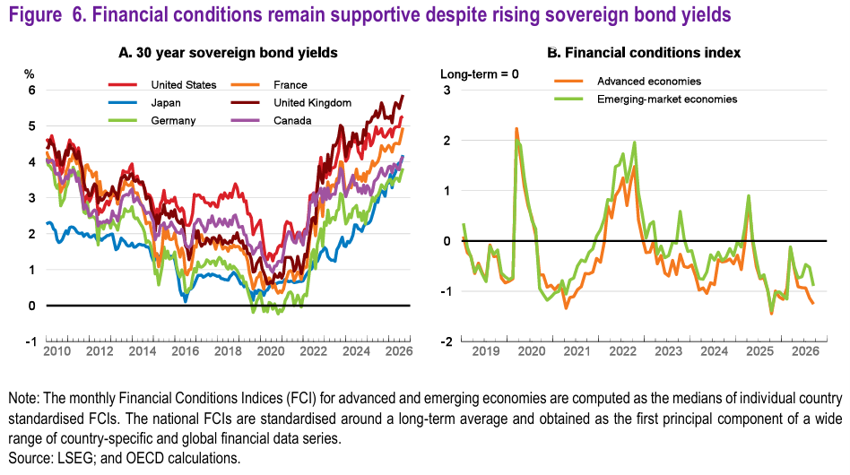
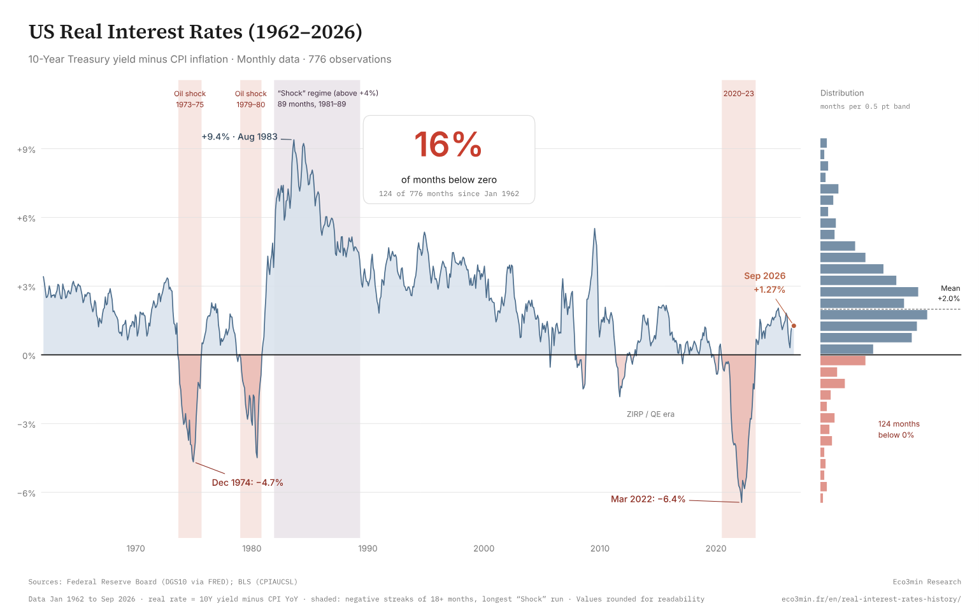
Securities markets : Long-term interest rates have hit 15-year highs as a result of rising debt and inflation.
Key opportunities : An end to the two ongoing wars, although with low probability.
Performance of financial markets 3Q26: The paradox of the simultaneity of record levels of equity markets and interest rates in developed countries.
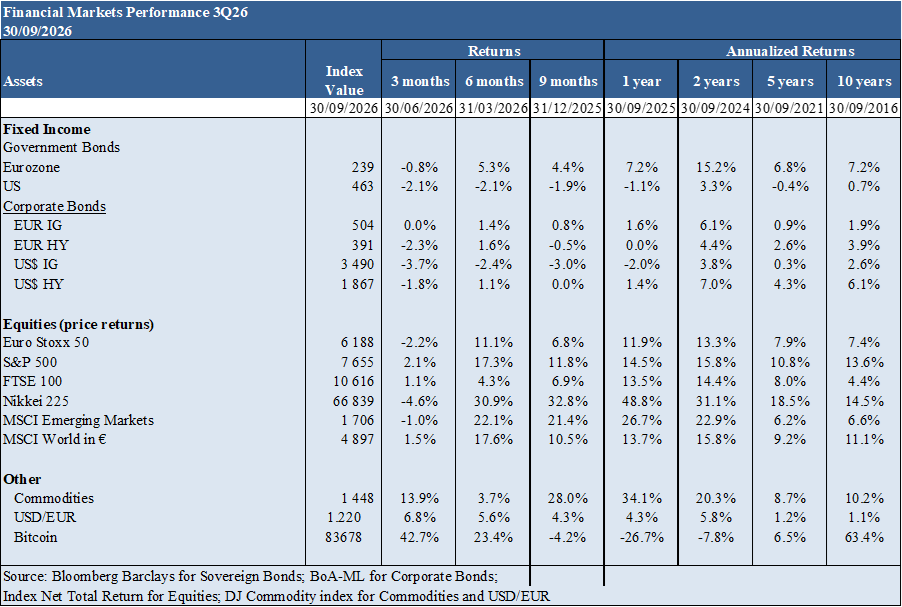
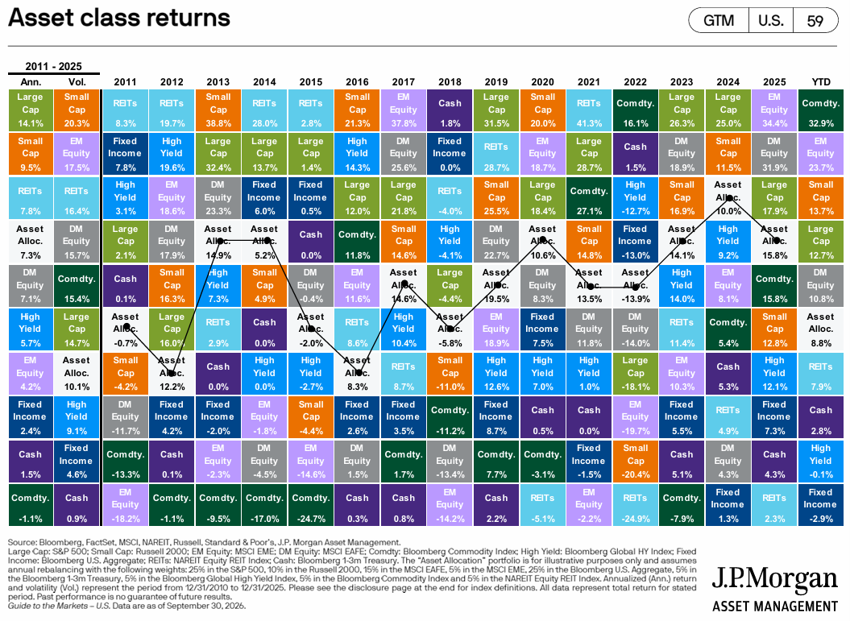
In the third quarter, stock markets in developed countries hit record levels, while interest rates rose to 15-year highs.
Global stocks saw strong gains, led mainly by technology-driven growth and spending on AI infrastructure.
Energy prices have risen again, which has caused further inflationary pressure.
Bitcoin had an important appreciation.
.
Macroeconomic context: Economic growth forecasts are stable, despite worrying signs of inflation and rising debt in major Western economies.
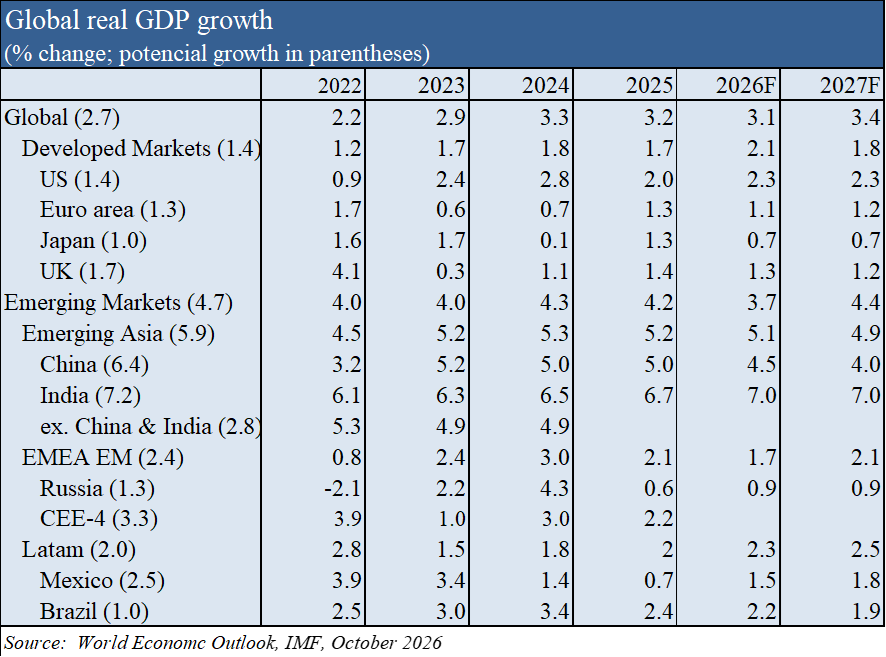
Global activity is forecast to grow by 3.1% in 2026 and 3.4% in 2027, maintaining forecasts from the beginning of the year.
This resilience stems from the adjustments of energy policies to the oil shock and the expansion of investments in artificial intelligence.
Headline inflation is projected to rise to 4.7% this year, mainly reflecting rising commodity prices, and to fall back to 4.1% in 2027; the transition to core inflation is expected to be limited.
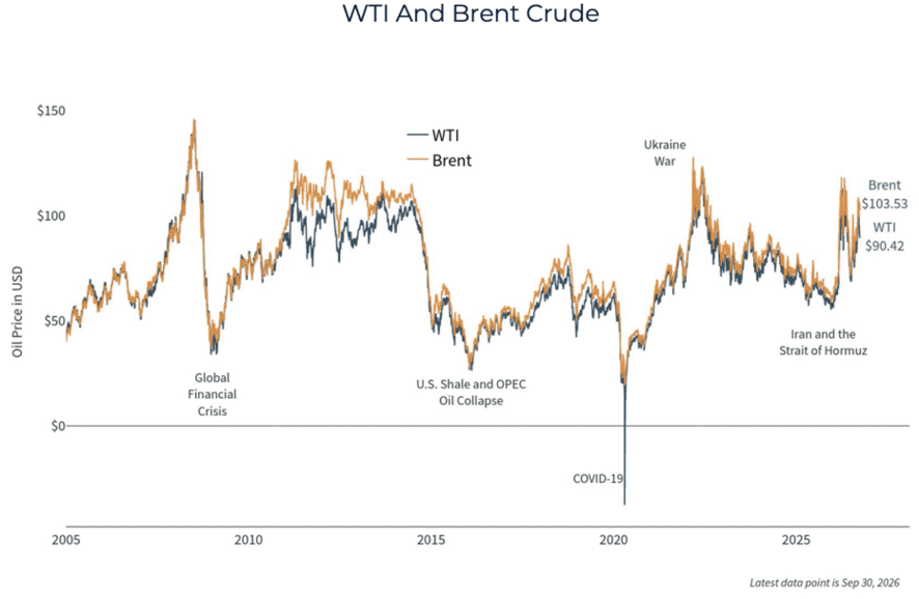
Oil has affected all sectors of the economy. Brent crude hit more than $100 a barrel in September, after hitting $120 in April. Concerns about the ability to transport oil around the world from the Persian Gulf have centered on the Strait of Hormuz, which continues to suffer disruptions.
Microeconomic context: Key instantaneous and leading economic indicators rose as a result of the ceasefire.
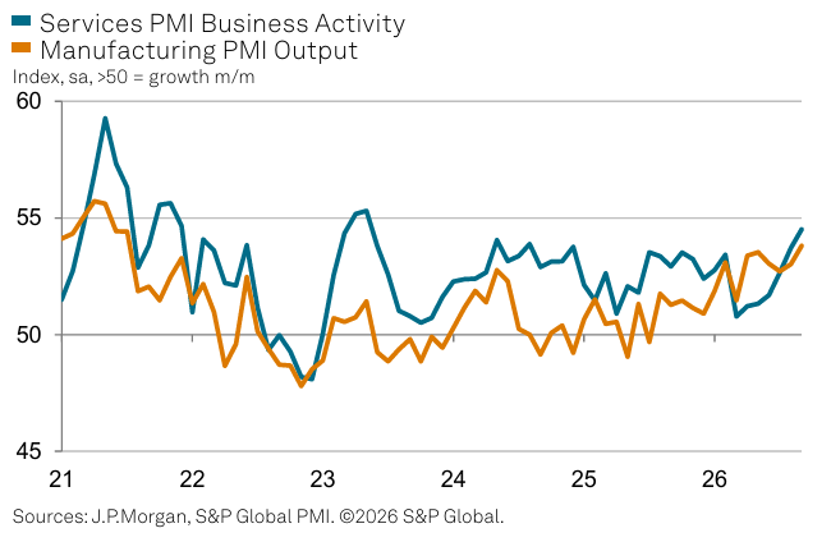
The global services activity PMI rose to a 40-month high of 54.5 in September, remaining above the comparable global manufacturing PMI (which registered 53.8) for the second consecutive month.
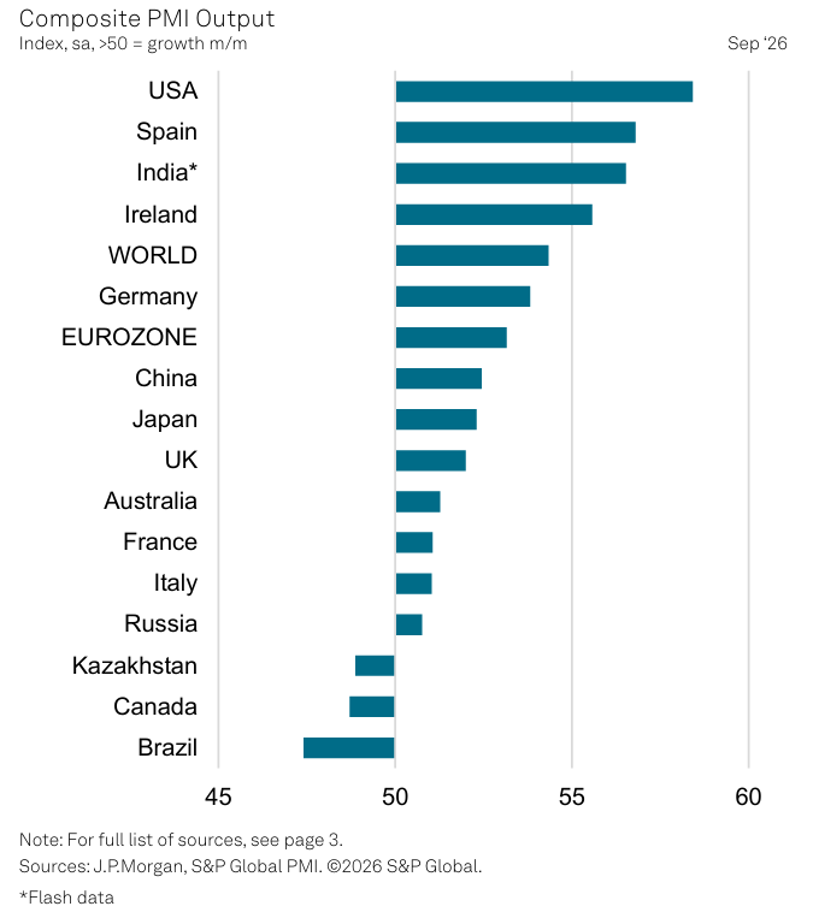
12 of the 15 countries for which September PMI data were available recorded an increase in economic activity.
Economic policies: Governments and central banks will have to adopt restrictive policies to reduce public deficits and contain debt and inflation.
In the current context, restrictive policies are inevitable, both at the fiscal and monetary levels, to contain inflation and reduce public deficits and debt.
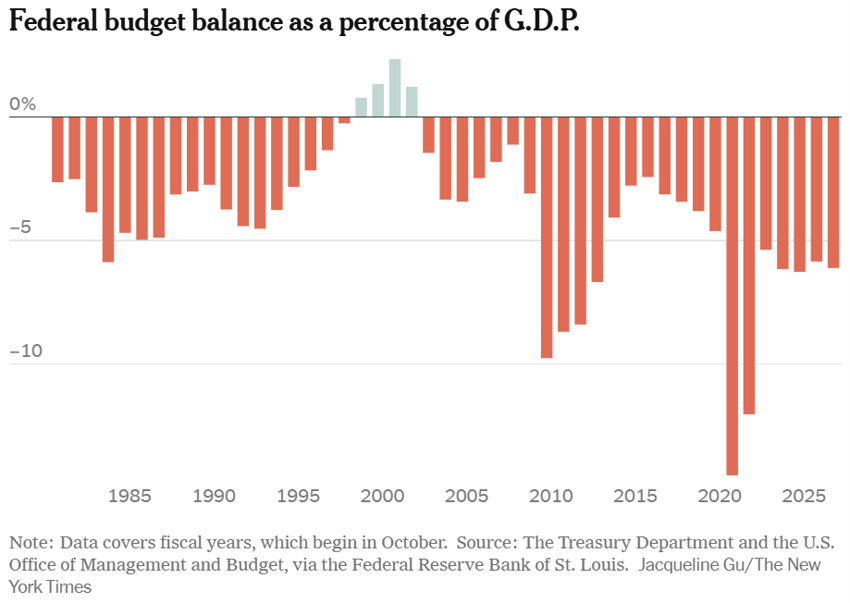
In the US, public debt has recently exceeded $40 trillion, the deficit has reached 6% and interest service is estimated at more than $1 trillion.
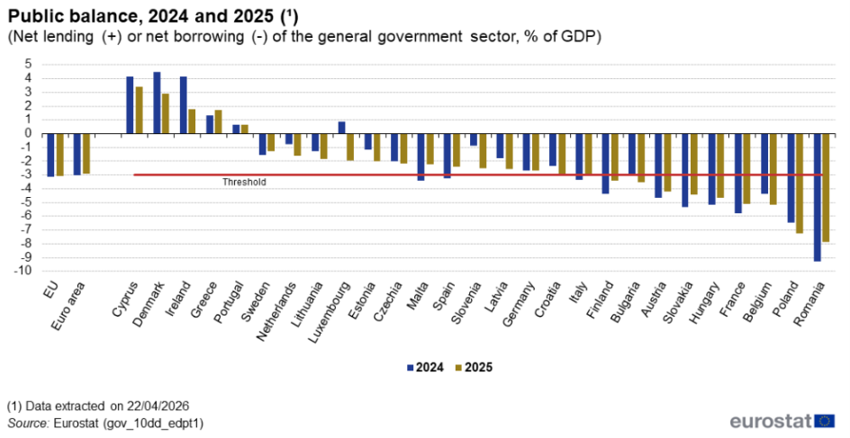
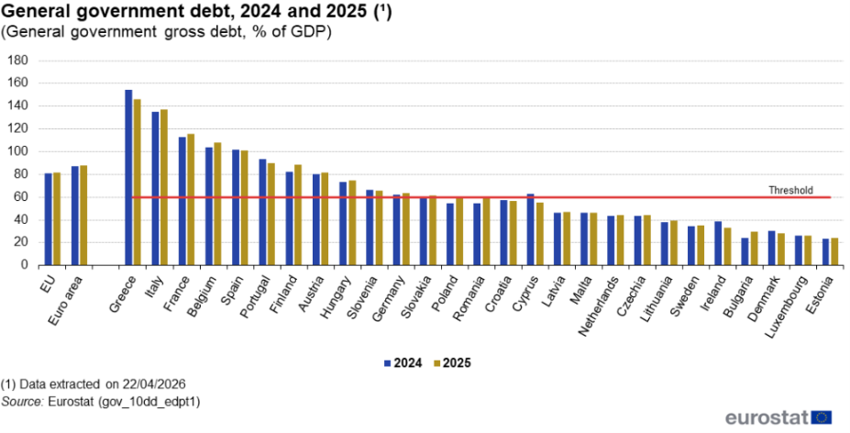
In many European countries, levels of public deficits and indebtedness are also excessively high, especially in France, the United Kingdom, Belgium and Italy.
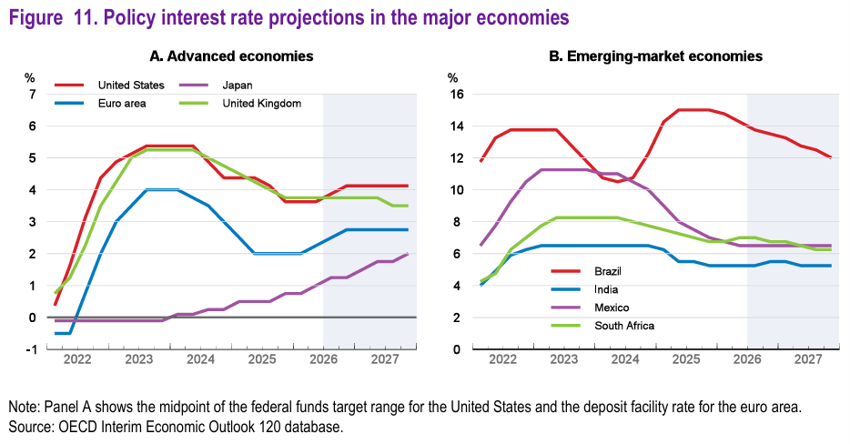
The central banks of the US, Europe and Japan have been raising official interest rates to contain inflation.
Equity market valuation: Equity markets hit all-time highs in developed countries driven by AI-linked companies, with Anthropic’s IPO in sight.
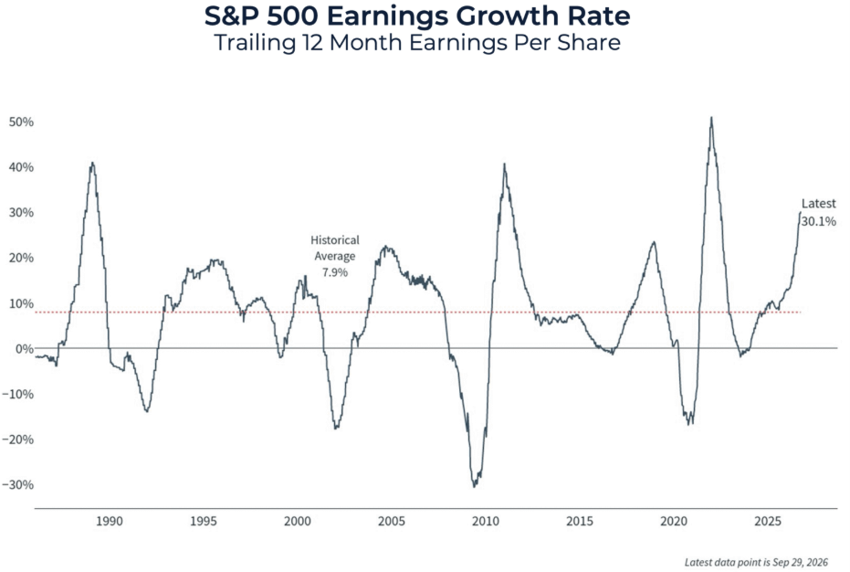
Earnings for S&P 500 companies grew approximately 29 percent year-over-year, well above the historical average of about 8 percent, supported by continued investment in technology, resilient demand and margin expansion.
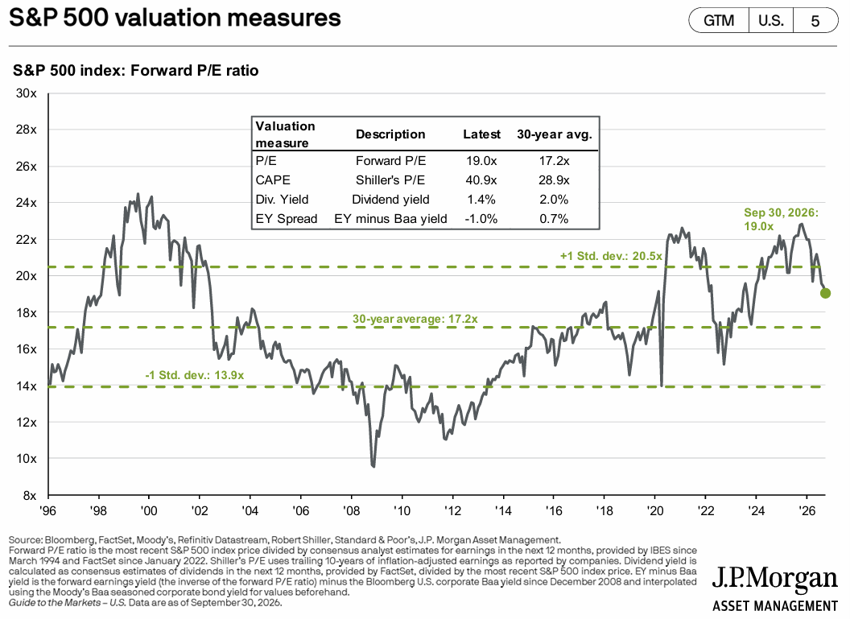
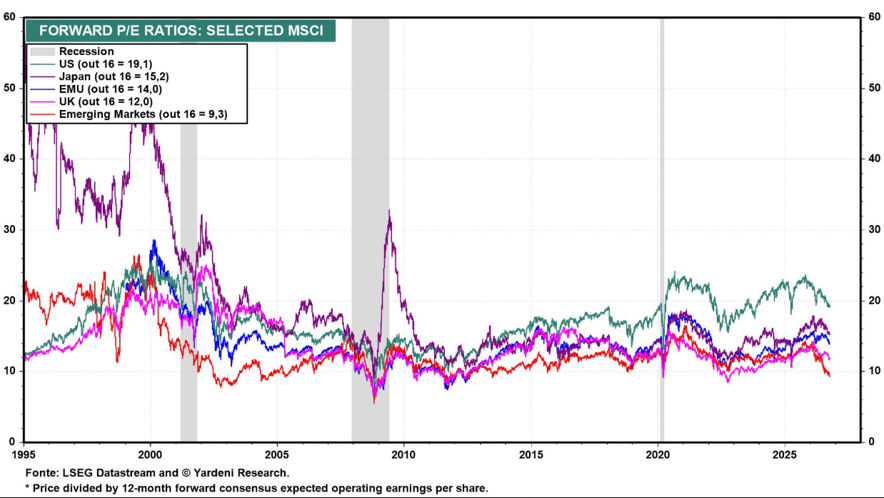
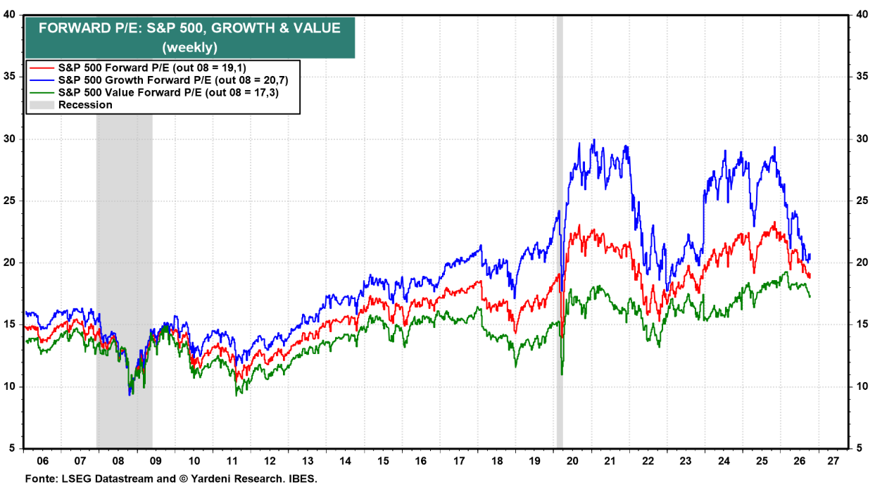
The S&P 500 currently trades at a price-to-earnings ratio of around 19.2x, above the historical average of 16x but below recent peaks. Valuations have held steady despite this year’s rally because fundamentals have also improved.
Ex-US companies’ earnings also improved, supporting the outperformance of equities in 2026. By the beginning of the year, emerging markets had returned more than 20% and developed markets around 10%, supporting a geographically balanced portfolio.
In November, Anthropic’s IPO will take place, which could value the company at $2 billion, making it one of the largest ever on par with SpaceX’s recent IPO. The prior disclosure of the company’s economic and financial data, as well as the projections contained in the prospectus, will allow for a more grounded analysis of much of the artificial intelligence ecosystem.
Japan’s PER is at 15.2x, Eurozone’s at 14.0x, 12.0x for the UK and 9.3x in emerging markets.
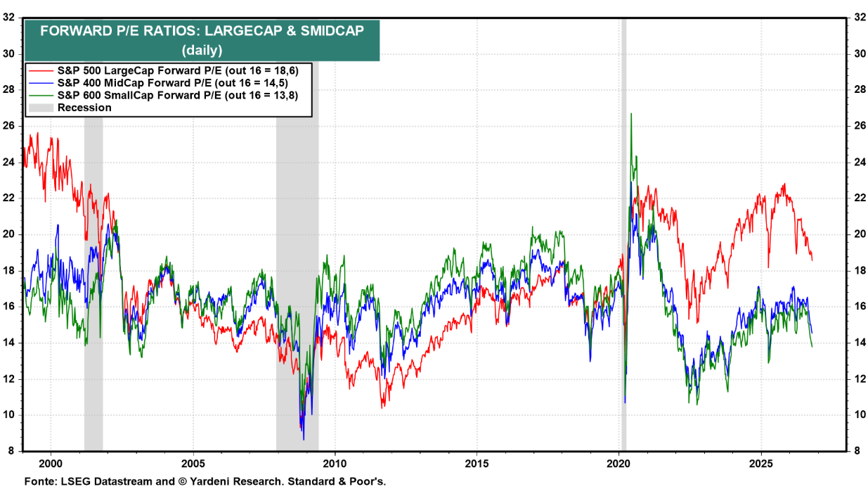
The PER of mid-cap and small-cap U.S. stocks is at 14.5x to 13.8x, respectively, in line with the long-term average.
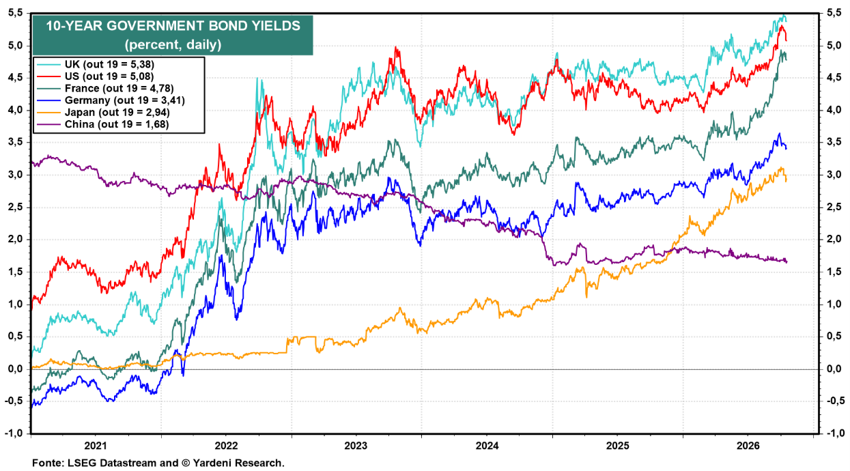
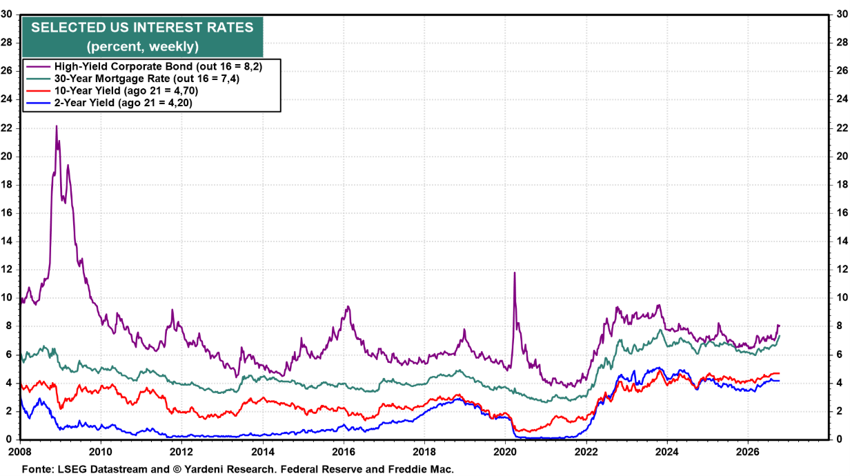
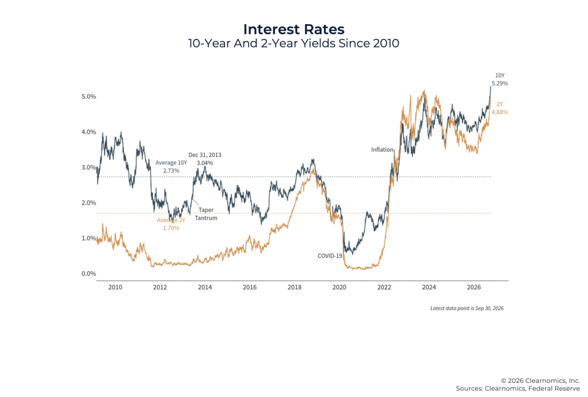
Bond market assessment: Long interest rates have reached 15-year highs as a result of rising debt and inflation.
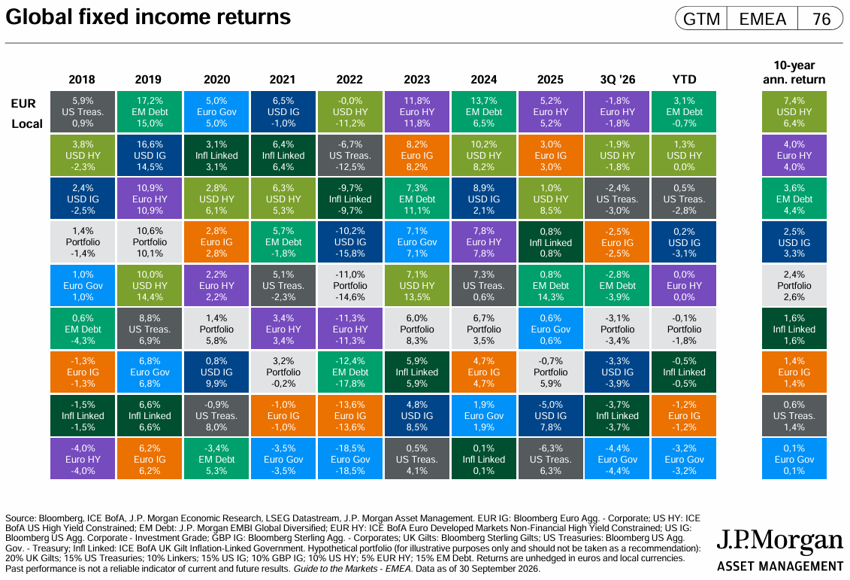
Long-term interest rates in the US, the Eurozone and the UK have risen to 15-year highs due to high levels of public debt and inflation.
10-year interest rates exceed 5% in the US and the UK, and are close to that value in France.
The debt interest bill is reaching unsustainable levels in many of these countries. In the US, the cost of debt in 2026 will be $1.4 trillion.
In the fourth quarter, European countries will discuss and approve the budgets for the following year, in a tense social context and with legislative elections coming up in some of these countries.
Main opportunities: End of the two ongoing wars, although with low probability.
The conclusion of the two ongoing wars, in Iran and Ukraine, through negotiation, will make it possible to reduce inflation and provide greater fiscal space for the US and European countries.
Main risks: Economic deterioration from restrictive policies and ongoing wars, in a tense social environment with protests and elections on the doorstep, could be a harbinger of a crisis.
Prolonged high oil prices test global resilience, increasing risks to growth, inflation and monetary policy.
The sharp increase in energy prices risks causing a “stagflationary” shock to the European economy.
The risk to the global economy stems mainly from developments in the United States and Europe.
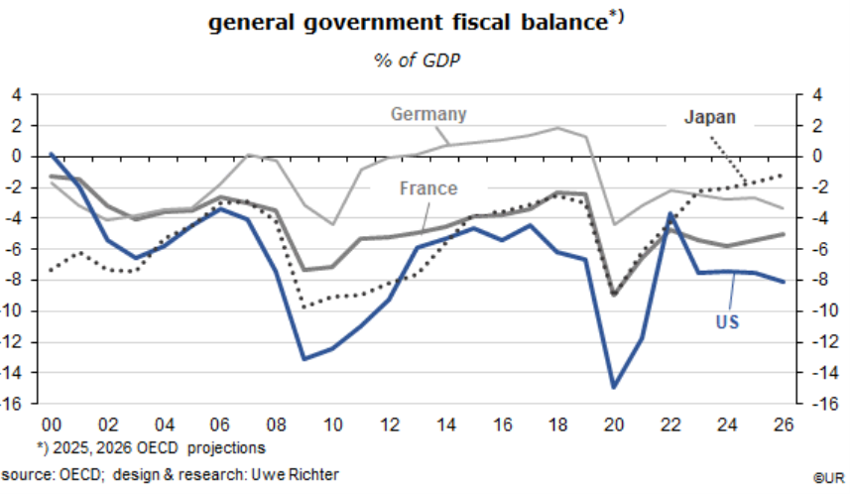
According to OECD data, the public deficit in the US will be around -8% of GDP in 2026, as a result of expansionary fiscal policies and an increasingly weak economy. The labor market has begun to stagnate and employment has been growing very slowly for months.
U.S. government debt is increasingly becoming a problem. At the moment, it has exceeded 120% of GDP and the IMF projects 123% for the end of the year.
In Europe, the biggest problems are concentrated in France, the United Kingdom and Italy. In France, the deficit exceeds 5.4% and indebtedness 119%. The United Kingdom has a deficit of 4.4% and public debt of 94% and Italy shows a deficit of 3.0% and indebtedness of 131%.
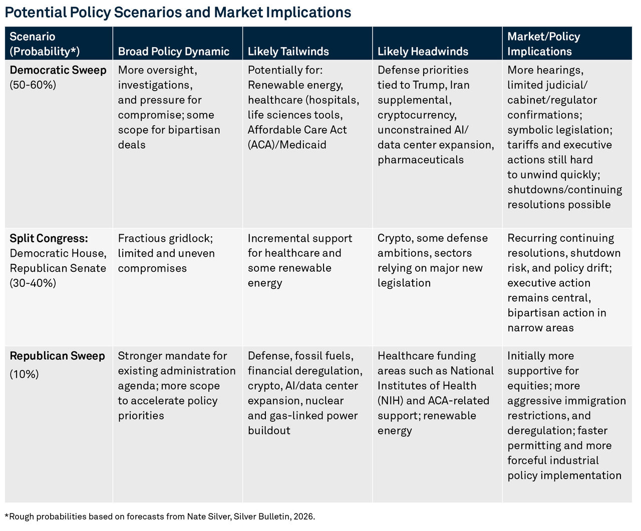
The midterm elections in the US in November and the legislative elections in France in April could accentuate social instability.
In the US, the latest polls point to a victory for the Democrats in the House of Representatives, and a very close race in the Senate.
In many European countries, there is an increase in social protests due to the rising cost of living, the housing crisis and the deterioration of public services.